The Last Minute in the Vending Machine
Page 119 of 196
Chapters
Len turned his head, not his shoulders. “That procedure is not a second hearing for evidence a party neglected to submit.”
“It’s for a fact that can’t be resolved from the record as published.” Ivo held up a folded sheet. “Section nine. If the petition identifies a specific contradiction affecting the finding, the chair can order a public correction session. It requires notice, a checkable demonstration, and the original record or an account of why it cannot be produced.”
The chair accepted the paper from the clerk and read it. Miren watched Ivo’s mouth as he waited. His cleft chin worked once, then stilled. He had put this in front of her earlier that week, marked in pencil where the rule allowed a correction even after exhibits closed. He had not claimed it would be easy. He had said it was a door, and doors were worth checking before anyone decided a room was sealed.
Len said the rule was intended for transcription errors, not to introduce a labor dispute. “What they propose is a reconstruction of a catastrophic event using watches manufactured years later.”
“We are not proposing to prove the crash with watches,” Miren said.
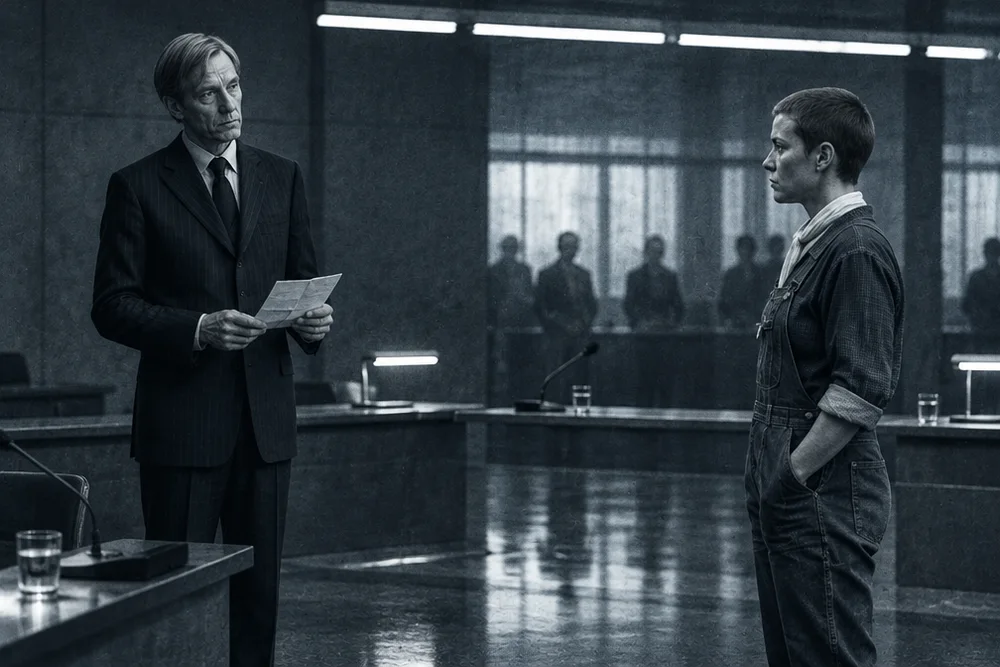
It was the first time she had spoken since Len’s objection. Her voice sounded too dry in the large room. She took a sip from the water glass, set it down carefully, and continued. “We’re proposing to demonstrate how the record’s conversion changes the order of two entries. The dispatch carbon is the evidence. The watches let witnesses show what the conversion does.”
Len’s hands settled on the table. “Then produce the carbon.”
Tess looked down at the packet. The blue string crossed the paper like a narrow restraint. Miren could see the effort it took not to reach for it. The chair said the session could not proceed on a promise of evidence, and Len gave a small nod, as if the point had already been settled.
Ivo remained standing. “The carbon is in the packet. It has a form number in the board’s exhibit index. We can establish that. What we need is a method that lets the public see why the two readings are different without asking them to take our word for it.”
Miren looked at the display above the lectern. Its red seconds advanced in patient steps. A public clock, she thought, and only one of them. She pictured the closed island at Glasshook: the vending machine against its tiled spine, the dispatch window opposite, the glazed stair admitting a narrow band of movement from the live interchange above. A dozen watches. Twelve statements. Each one tied to a person who had been accounted for during a minute that the official chronology treated as empty.