The Last Lift Before Rain
Page 69 of 272
Chapters
“If the low exit is lost, they won’t be coming back for the pot.”
The cook stared at him. Tavin did not flinch. He had spent years keeping the kitchen stocked through floods and shortages, and his hands had the blunt competence of someone who knew exactly how many meals sat between a shelf and an empty bowl. He began dividing beans into smaller cloth bags, not taking more than his share from the pantry but making it easier to carry.
Pella watched the room change around the work. A woman who had challenged her began wrapping bread in clean cloth. The gray-scarfed man picked up a stack of tin cups, then paused to ask where they were going. Nobody said “evacuation.” Nobody said “relocation.” They said “the upper landings,” “the bell niche,” “the old lift,” and “if it works.”
A child tugged at her guardian’s skirt. “Are we sleeping somewhere else?”
“Maybe,” the woman said. She looked at Pella. “Will they make us leave the ridge?”
Pella could not answer for the council. Her throat tightened around the temptation to soften the truth, to offer a comfort that would become a debt. “I don’t know. I can help get you above the water today. After that, we’ll have to argue about where you stay.”
The woman studied her face, then folded two more blankets into the sack. “Then don’t lose the way up.”
Tavin began assigning the kitchen regulars to messages. Not by rank or age, but by who would be believed at each door. Nemi took the first set, moving among the tables with quiet, quick instructions. A bowl was passed. A name was spoken only once, and never written down.
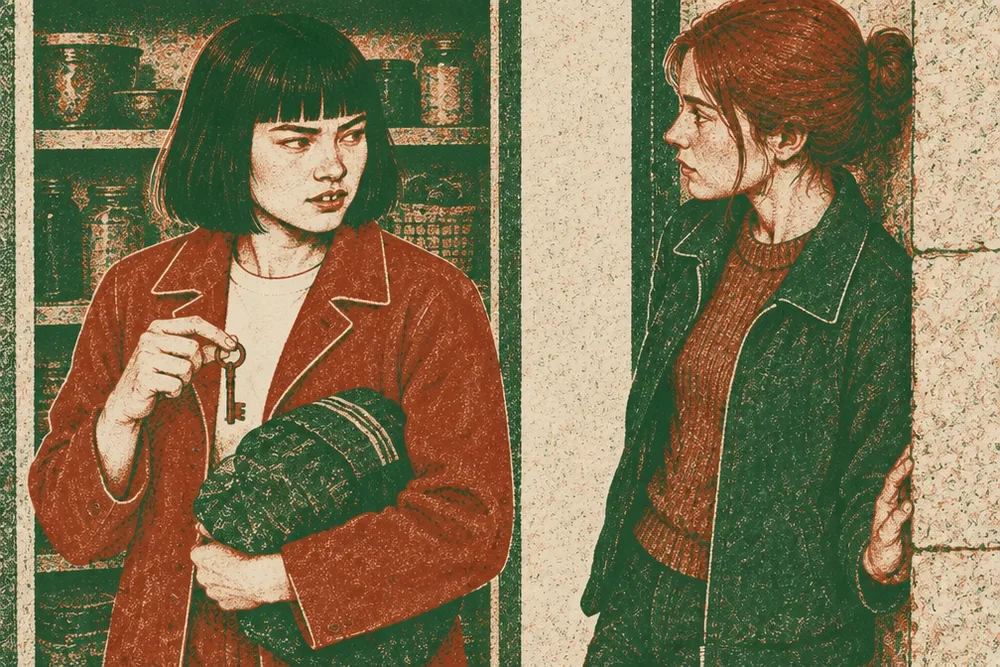
Pella moved to the pantry entrance and found herself blocking the narrow passage. She stepped aside, making room for a woman with a bundle tucked under one arm. The woman went through without looking at her, but not before Pella noticed a brass key pinched between two fingers.
“For the upper room?” Pella asked.
The woman’s eyes sharpened. “For my own door.”
“Keep it.”
“I intend to.” She disappeared into the corridor.
The answer left Pella with no defense to raise. Her orchard apron stood above the abandoned lift, her terraces built stone by stone with the intention of keeping soil from sliding. She had thought of that ground as hers because she had worked it. Now a family’s key could mean everything: the right to return, the right to close a door, the difference between a shelter and a place where someone else stored sacks.