The Last Lift Before Rain
Chapter 23 · Borrowed Ground
Page 248 of 272
Chapters
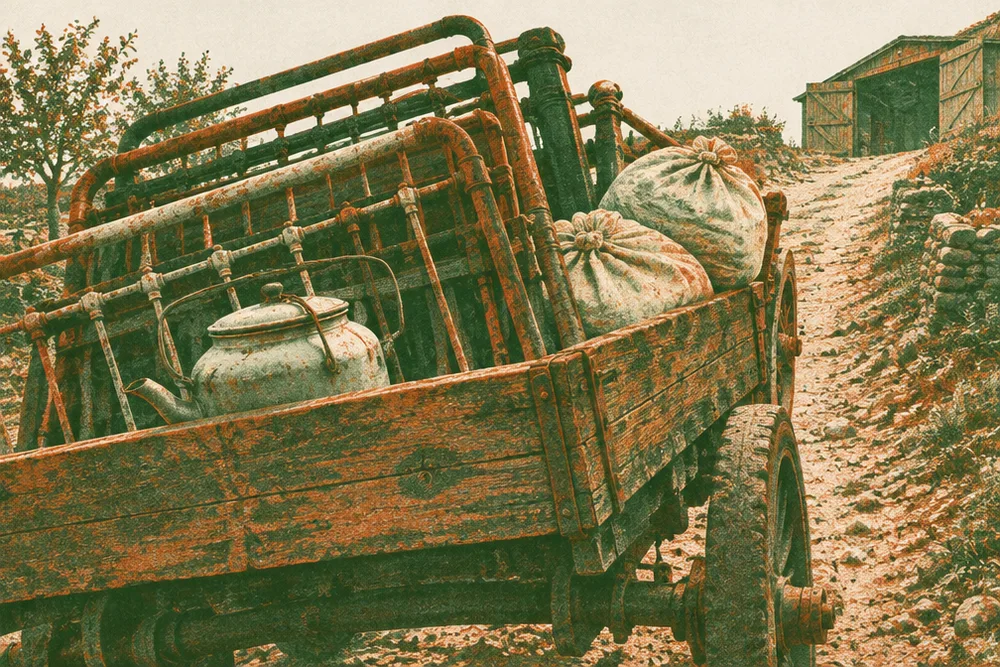
Six weeks after the rain, the ridge still smelled of wet salt whenever the wind came in from the flats. The old galleries showed only as a pale seam below the spoil bank, and the lower drainage channel had become a brown, slow-moving cut through the white. Pella stood on her orchard apron with a deed folded in her jacket pocket and watched a cart struggle up the bridle path. It carried three bedframes, two sacks of blankets, and a kettle with its lid tied down in wire. The driver had to stop twice to rest the mule. There was no freight lift for them yet, only the commercial one at the market, where the queue already bent around the council yard.
The apron had once been hers in every way that mattered. She had leveled its stony shoulder, built terraces to keep soil from sliding, and planted the pear saplings she could afford. Then the terraces had become ballast, each stone surrendered one by one to bring the old lift back to life. A narrow strip remained along the upper edge, dry and rough, where the survivors had slept under canvas while the freight sheds filled. Now the shed doors stood open, revealing pallets of goods pushed against one wall and families’ bedding against the other. Vendors wanted their storage back. Families wanted somewhere they could stay without being told each morning that their time was nearly up.
Pella’s deed was a single sheet of council paper, the corners soft from being carried and handled. It named her as owner of the apron, the terraces, and the lift approach. At the council yard, Mera had placed it before her with the council seal ready beside it. Pella had looked at the lines and understood that keeping the land in her name would only give the next official a clean place to begin bargaining. So she had asked for a new deed, one that could not be sold, divided, or withheld from the people who had made a home there. Mera had said the council did not usually give up land. Pella had answered that it was not the council’s land to give.
Now, beneath the slanting afternoon light, she could see Mera coming along the path with a document case under one arm. Her rust cape lifted in the wind. Behind her walked a clerk carrying a shallow box, and Tavin came from the sheds with flour on his striped apron and a wary crease between his brows. Pella pressed her thumb against the paper in her pocket. She had learned not to confuse a promise with a thing you could stand on.