The Last Lift Before Rain
Page 233 of 272
Chapters
The woman with the cord studied the lift mouth. “And the night watch?”
“We can make a turn list. No names needed. Mark a time and a household, if that’s what people prefer.”
“My household is one person,” she said. “I don’t want to be paired with someone who thinks that means I’m free to do twice as much.”
“Then you choose your own shift.”
The woman nodded once. It was not agreement to stay; it was agreement to consider a shift. Pella had learned that the difference mattered.
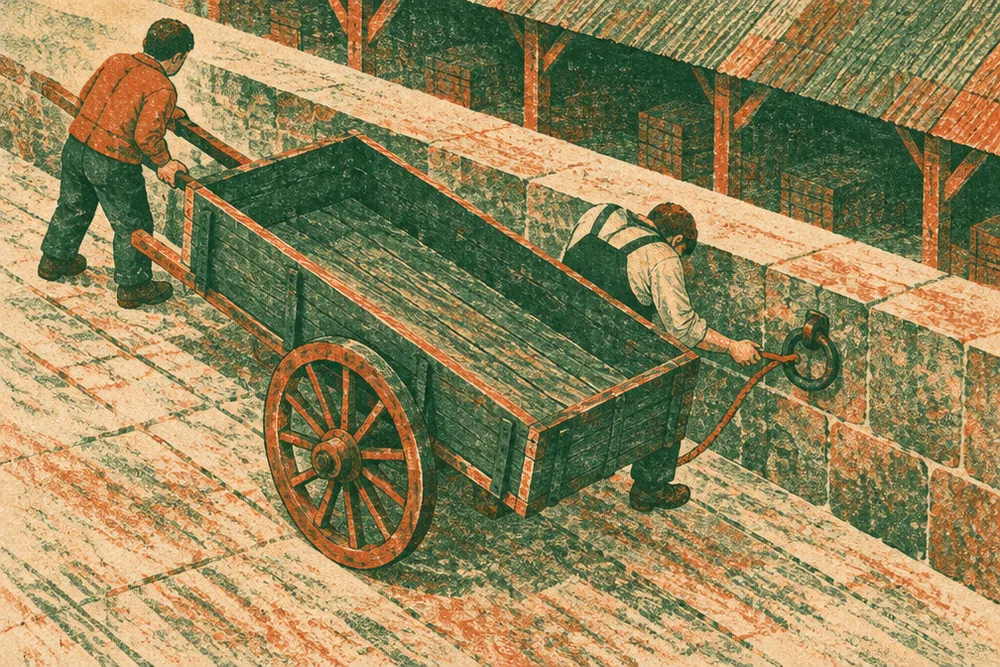
At the sheds, Tavin and several gallery residents were hauling carts toward the upper wall. A market porter guided the first one, showing them how to lash the wheels to iron rings so they would not roll on the incline. Two children carried the lighter baskets, solemn with responsibility. The blue-capped vendor had given up his cap to cover a tin of seed, then borrowed a scarf from one of the residents.
“There’s a place for the cooking line,” Tavin called. “But not enough firebrick.”
“The broken terrace blocks,” Pella said. “Some can make a hearth. Keep the load-bearing ones where they are.”
She saw the stones in her mind, counted and placed, each one a part of a slope she had once believed would be hers to finish. The missing terraces would not grow back simply because the rain stopped. She made herself look at the people lifting the cart instead.
“I’ll mark the safe pieces,” she said. “No one moves a stone without checking the line.”
Tavin gave her a tired, crooked smile. “That sounds like you.”
“It’s supposed to.” She took one end of the rope and helped pull.
By noon the rain had eased to a fine mist. The apron was still cold underfoot, but the windbreak screens had gone up along its north edge. They were old nursery panels, sun-bleached and scarred by the hooks that had once held seed trays. Pella stood them upright, braced their feet with small stones, and watched the wind press them without toppling them.
The vendors moved their carts into a line beneath the shed eaves. Each cart was chained to an iron ring, and the families agreed to watch them in shifts. In exchange, the vendors left the loading strip open and made a corner of the upper shed available for blankets. It was not generosity without limit. The boundaries were clear, and so were the obligations.