The Houses on the Roll
Page 76 of 213
Chapters
Dev examined the marked step. “If they ask whether I used this door before the flood, I can answer. If they ask me to speak for the whole row, I can’t.”
“You won’t be asked to,” Mara said. “Not by me.”
She put the clean plan in the folder for Silas and the separate annotated copies in the restricted envelopes. The outline could help the review officer see what the old map had collapsed together. It could not say, by itself, that four households had been present on the scheme’s eligibility date. That question remained open, and the distinction mattered.
Mara closed the folder and pressed the brass fastener through the paper. The correction she had made eight years ago was still in the public record. The new drawing did not erase it. It gave the people behind the four doors a way to show where one home ended, where shared space began, and what the maps had failed to see.
That evening, Mara spread the measured sketch beside the old service plan and the repair request. The papers did not line up perfectly; the old plan’s numbers still ran against the order a person would walk them. She noted that in the margin rather than straightening the sequence herself. Silas would need the service number and the drafter’s measurements. Rowan would need to decide what weight they carried. The residents would decide what their own copies said.
Before closing, Mara put the threshold note and the separate statements into the folder. She left the eligibility-date column empty. The temptation to fill it had not gone away; now she could recognize it sooner. A blank was not evidence of absence, but neither was it permission to invent certainty.
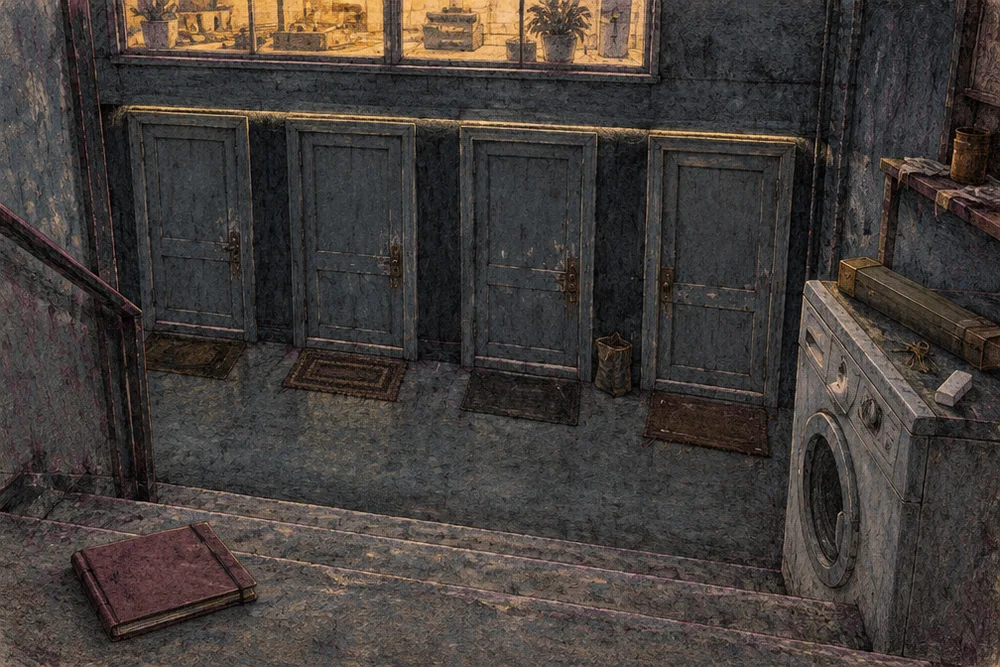
She turned off the shop lights and stood a moment at the top of the lower steps. From there she could see the shop’s bright window above the darkened row. The four doors were ordinary doors again: paint chipped around their latches, mats crooked, a bag tucked beside one. The plan in her hand made no claim about what those details meant. That would have to come from the people who knew them.
On Wednesday she would take the corrected outline to Silas. Then the separate occupancy evidence would have to carry the harder question: whether each household belonged on the roll at the date that mattered. For tonight, the reconstruction did one thing honestly. It gave the four homes edges without turning the laundry, the passage or the people into one more tidy account.