The Houses on the Roll
Chapter 15 · The Offer Without a Bus
Page 153 of 213
Chapters
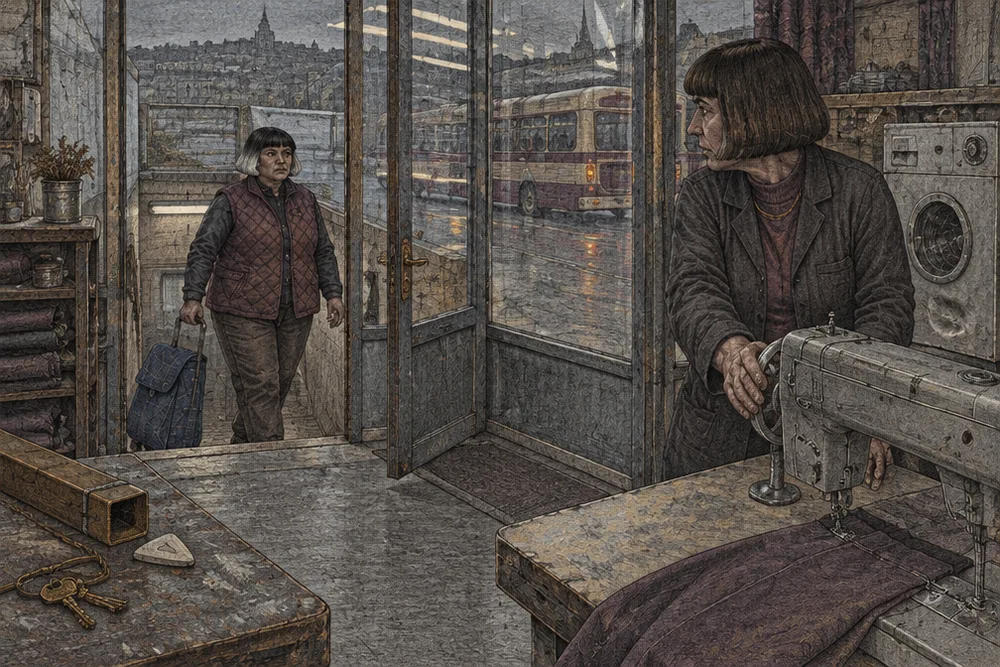
By the time the broker arrived at Tallow Row, the tide had turned and left a brown line on the lower steps. His shoes stayed clean on the raised road. He carried a folder under one arm and spoke as if the four households were already a single appointment he could move along by the hour.
“Six units,” he said, standing in the shop doorway. “Same block, across the estuary. Recently finished. We can hold them while the buyout decisions come through, but I need names by tomorrow.”
Mara had a length of trouser cloth under the machine’s presser foot. She stopped the wheel with her palm. Beyond the broker, the ridge bus hissed away from its stop; its windows flashed in the shop glass. “Hold them at what rent?”
He gave her a figure. It was not outrageous for a new block, which made it worse. Gareth’s flats had been cheap because they were damp, crowded against the dye-yard plots, and a long walk from anything that ran before dawn. The broker’s units were dry and clean and on the wrong side of the water for a hospital laundry worker starting before the first bus.
Inez came through the rear passage with her blue shopping bag bumping behind her. She had changed out of her work shoes but still wore the plum vest. “Across the estuary,” she said. “There’s no early bus.”
“There’s a later service,” the broker said. “And a footbridge.”
“At five in the morning?” Inez’s chin lifted. “I hand over the laundry shift at six. I don’t hand over an hour of my life to a footbridge.”
The broker looked to Mara, as though the person behind the counter might convert that into a manageable objection. Mara folded the cloth and set it aside. “You can leave the terms,” she said. “Nobody is giving you names today.”
He did leave them. His folder made a pale rectangle on the cutting table beside Silas’s map tube, whose square end still carried a scratch from being dragged through the council archive. When the door closed, the shop seemed to have become a waiting room with a sewing machine in it.
Inez did not sit. She laid the broker’s page beside the machine and read the rent twice. “We should test it,” she said. “Not argue from a timetable somebody else typed.”
Mara knew the bus schedule, or thought she did. She had spent years measuring distance in forms: nearest stop, service frequency, acceptable access. She did not offer the numbers. “Do you want company?”