The Houses on the Roll
Page 213 of 213
Chapters
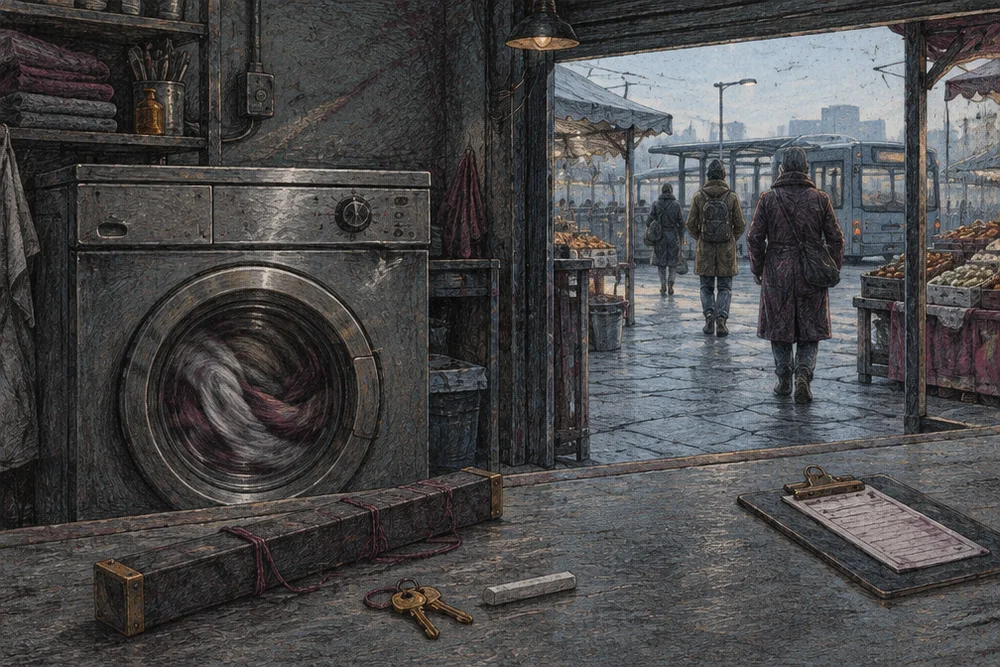
The drum picked up speed, steadied, and began its rinse. A commuter stopped at the stall to ask whether Mara took trouser hems. She did, by appointment, and pointed to the card showing the hours. The commuter checked the bus time and booked a fitting for the next afternoon. Mara wrote the appointment in the ledger, not on a loose scrap.
She had once recorded addresses in a field that looked small enough to control. This ledger had columns too: customer, work, date, agreed price, pickup. The difference was not the paper. It was that the person whose coat was being altered could read the ticket, correct her, and decide what work to buy.
Near closing, Mara checked the wash temperature, then the time remaining. She opened the public correction again and read the last paragraph of Rowan’s reasons. The dwellings had been established through the service plan, resident annotations, repair records, and individual testimony. No single account had been treated as proof of everything. Her own statement established how the shared address had entered the roll and why that history had mattered.
There was no neat final sentence to put over the stall. She shut the folder and returned it to the drawer. The four homes remained named as dwellings in the public record, and the superseded sheet remained there too. A person could see what had been entered, who had changed it, and what the review had decided. The record did not make the flood go away or reunite neighbors who had moved to different parts of town. It did stop the shop from standing in for them.
The porter’s wash cycle finished. Mara checked the shirt against the ticket and found the collar clean, the seams intact. It needed another few minutes on the drying rack. She wrote a message giving the revised pickup time, then waited before sending it, considering the difference between a delay disclosed and a delay imposed. The customer had chosen a slot with room for the bus. She sent the message.
When she locked the stall, the washer was still turning through its final slow rotation, the load balanced and the drain running clear into its own pipe. Mara waited until the cycle ended before cutting the power. Beyond the open front, the market’s evening crowd moved around the stall and out toward the bus stops. She set the porter’s ticket under the clip for morning pickup and switched off the work light.
The first full wash had taken the time it took. It had not sent its cost through a wall.