The Houses on the Roll
Page 46 of 213
Chapters
He first read the sequence from the shop end: one, two, three, four. Then he noticed the arrows that indicated the route from the lower steps. The numbering began at the opposite end there. What looked like two versions of the same door were actually two schemes facing one another, each starting where its own entrance began. The painted numbers at Tallow Row had not been an unreliable decoration. They had been a local answer to a plan that gave the same threshold different numbers depending on which side one approached.
Silas put the map tube on the bench and unrolled the current buyout map beside the old plan. On the current sheet, the rear row was a grey rectangle marked STORAGE, attached to the shop’s parcel. The old drawing showed the dividing line, but not the people who had crossed each threshold. He ran a finger above the ink without touching it. Invoices could establish work done at rear landings; the plan could establish that the landings belonged to separate units. Neither could yet tell him who had been living there on the scheme’s date.
He called Mara from the corridor, where the archive’s reception was better. “The invoices distinguish the rear drains from your shop sink,” he said. “And I’ve got a pre-flood plan. The door numbers reverse at the lower steps.”
There was a pause, then her voice: “That’s how people have always given directions there. From the street, or from the flats?”
“Both. I’m going to send you the drawing reference, not a copy with anyone’s name on it.”
“Good,” Mara said. “Let the people who live there tell you which door they mean.”
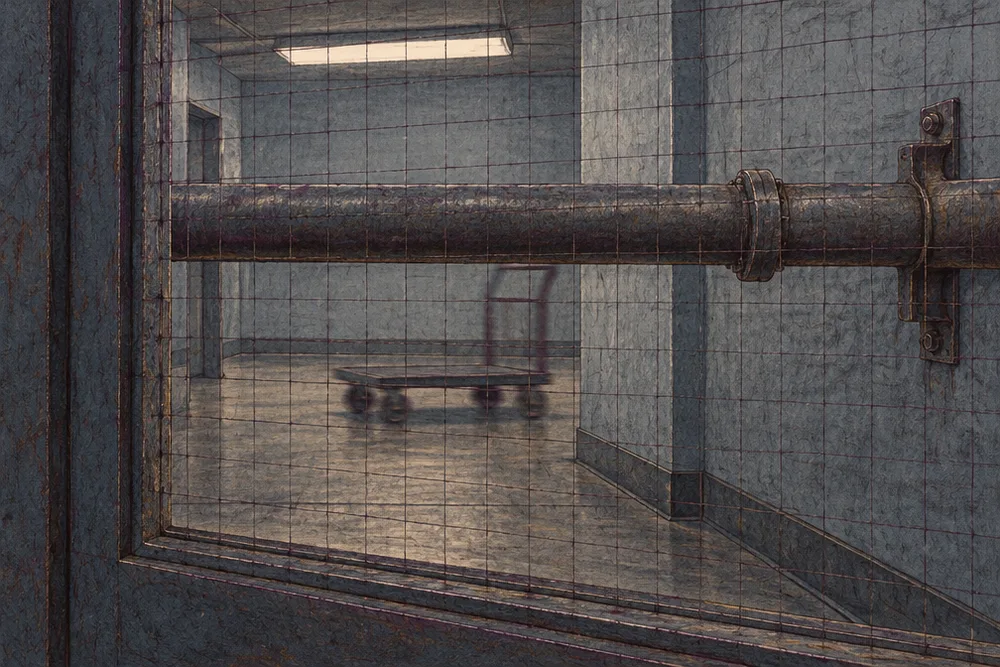
In the corridor the heating pipes ran at shoulder height. Silas moved his phone to the other ear to let a man with a sack trolley get past. The trolley had nothing on it, but at each join in the concrete its loose toe plate struck the floor.
“Are you still there?” Mara said.
“Yes.”
“When you send it, can you put what it is in the message? Not just the number. I spent half Friday telling people I had a service drawing. They thought that meant somebody was coming to fix the drain.”
“A plan of the building, before the flood.”
“Does it say what the rooms were for?”
He looked through the wired glass in the reading-room door. From there the spread of paper on his table showed little more than its folds. “It shows where the rooms were divided and how you got to them. I’d have to check what the survey was actually for.”