The Houses on the Roll
Page 139 of 213
Chapters
“I’m writing only what I remember,” he said. “No opinion about his claim.”
“That’s fine,” Dev replied. “I don’t need your opinion.”
Gareth sat at the table. His heels were still together beneath the chair. He wrote slowly, stopping twice to check his own wording. He identified the key as the one for the lower landing door Dev called number three, and said he had allowed Dev to retain it during repairs to the side latch. He wrote that Dev returned it after the repair, which he recalled as late April, not before the twenty-third of March. He stated that the money Dev sent during his absence had been accepted as rent credit against the room.
He did not mention the storage labels in his earlier extracts. He did not say Dev had been in the flat every day. He did not say the council owed anyone money. When he finished, he turned the page around and read the whole statement again, his finger tracking the lines.
“I want that last part to say I accepted it,” Dev said. “Not that you offered it.”
Gareth looked at the sentence. “It says accepted.”
“Good.”
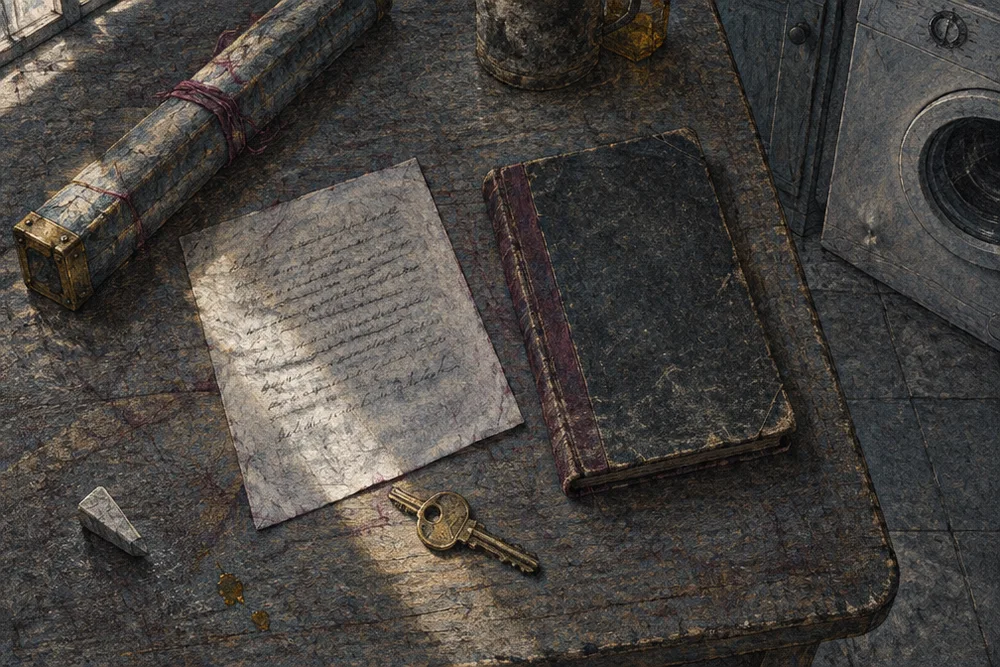
Gareth signed at the bottom and wrote the date. His signature leaned sharply to the right, the same as the one on Mara’s old shop lease. He slid the statement toward Dev, not toward Mara.
“There,” he said.
Dev read it carefully. “You’re sure about late April?”
“That’s what I remember.”
“Then that’s what I’ll file.”
Gareth’s gaze flicked toward Mara. It was not gratitude, exactly, or forgiveness for the public correction. It carried the expectation that she might say he had done the decent thing. She said nothing. The statement was a useful, limited piece of evidence. It did not erase the earlier account, or settle the audit, or change the fact that Mara had merged the flats when he asked. Gareth had helped, but he had not earned the right to say what his help meant.