The House We Could Move
Page 92 of 217
Chapters
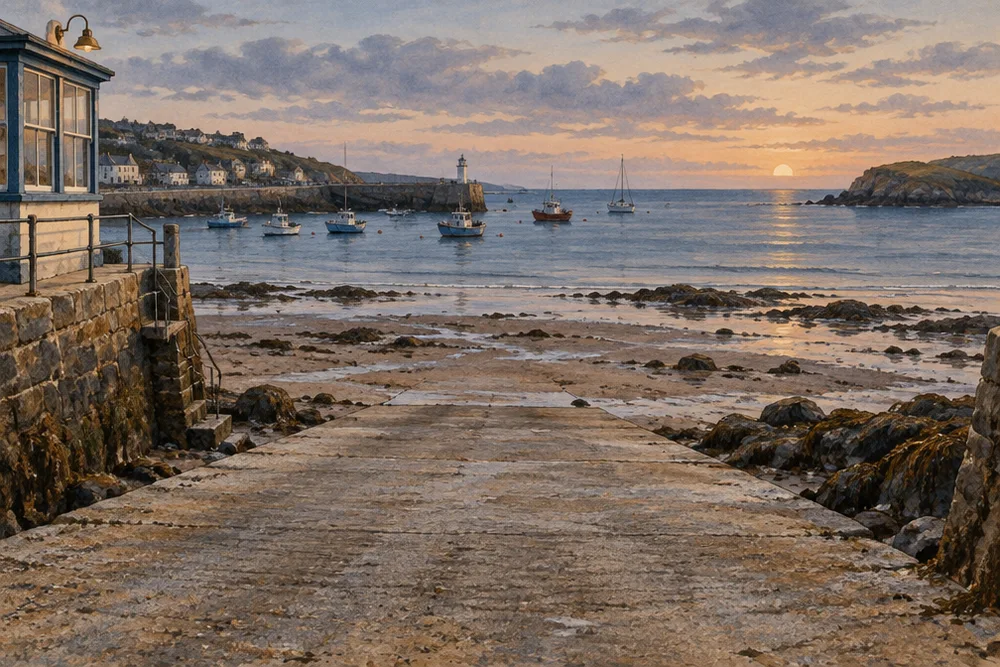
“I’m not asking you to promise it,” Orla said. “I need to know whether the daytime move can be considered separately.”
Mair nodded. “It can. The removal order is still in force, and the outer beach is a recognized shore. The trial license would be for landing and access under its published terms. Overnight use remains subject to the inspection.”
Quentin watched Orla listen. Her jaw had gone square, the way it did when she was making room for a fact she disliked. “If the move happens and the night access isn’t ready,” she said, “I’ll need somewhere else to sleep.”
“Yes,” Mair said. “The board cannot call a daytime landing permission to reside.”
The distinction was plain, almost cold. That did not make it cruel. Mair had people to answer for: crews, traders, anyone who might need to reach a person on the beach in an emergency.
Orla took the estimates back. “Then I’ll make the decision with both parts visible.”
Quentin unrolled the measured drawing at the end of the table. It curled so hard that the west shelf disappeared as soon as he took his hand off it. Mair set her clipboard on one corner, and Sella put her ledger on the other. That left the bend exposed and pinned the road under six years of shellfish dues.
“Leave it a moment,” Orla said when Sella went to shift the ledger. She bent over the drawing with both estimates tucked against her apron. “If I didn’t know the strand, I’d think this was a path to my door.”
Quentin looked at what she was seeing. He’d drawn the house in dashed lines, but he’d given it a window and steps so the board could see which way it faced. The launch lane was two strokes that ran off the sheet. Anyone who’d never stood there would have to take his word for what happened between them.
“Show me where you come up full,” he said to Sella.
She took the pencil he held out and put a blunt cross below the corner of the paper. The mark landed on the table. Mair lifted her spectacles and looked at it. Sella rubbed at the cross with the heel of her glove, which only spread it into the grain.
“That’s where the ramp runs out at low water,” she said. “If we start the drawing up here, you miss half the distance we’ve already pulled.”