The House We Could Move
Page 85 of 217
Chapters
Orla stayed to speak with Mair. “I want the record to show I’m not asking for the east plot to be treated differently because I suggested it be published.”
“It will,” Mair said. Her tone was brisk, not unkind. She unclipped the papers and handed Orla the revised draft. “The board can’t promise you a particular neighbor. It can promise an open process.”
“That’s what I’m asking for.”
Mair marked the copy with her initials. “And you’ll keep your storage inside?”
“It’s already there.” Orla thought of the cramped boxes beneath the cutting table, the drawer she had dismantled, and the bare strip of ground where her garden had been drawn. “It works.”
“Good. A license should describe what can actually be done, not the nicest version of it.” Mair added a note to the minutes.
Outside, the rain had thinned to a cold mist. The harbor lamps turned the wet paving dull gold. Sella walked with Orla as far as the corner where the road divided toward the cooperative sheds and the basin.
“You’ll need more than a promise to keep the path clear,” Sella said. “We’ll need the trolley measurements in the final plan.”
“I’ll bring the survey tomorrow.”
“Bring the old drawing too. It shows where you thought the fence would go.”
Orla gave her a look. “So you can use it as an example?”
“So we don’t put the same mistake on the next draft.”
At Bell Basin, she set the minutes beside her sewing basket and opened the house door to let out the stale meeting-room air she had brought in with her. The tide whispered against the float. Beyond the bay window, the harbor wall cut the night into a low line of stone and water.
She carried the survey to the table and spread it flat. The west shelf lay to the left of the lane. The east plot sat across it, small but clear. On her first version, the garden fence had made a little pocket beside the house. Now the paper showed open ground and the width of the route marked in blue pencil.
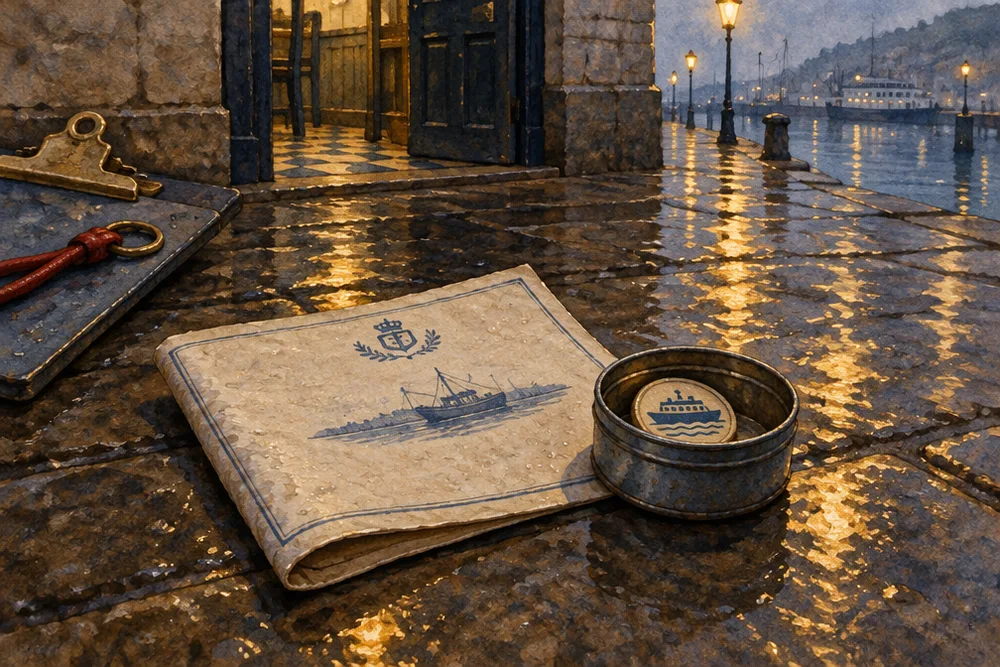
Orla moved her shop boxes once more, checking that the ones beneath the table could be lifted without blocking the door. They could. She placed the sewing basket on top of them and set the brass ferry token in the tin where it would not be crushed. The house was not as spacious as she wanted, but it would not be asked to hold every part of her life just because it was home.