The House We Could Move
Page 60 of 217
Chapters
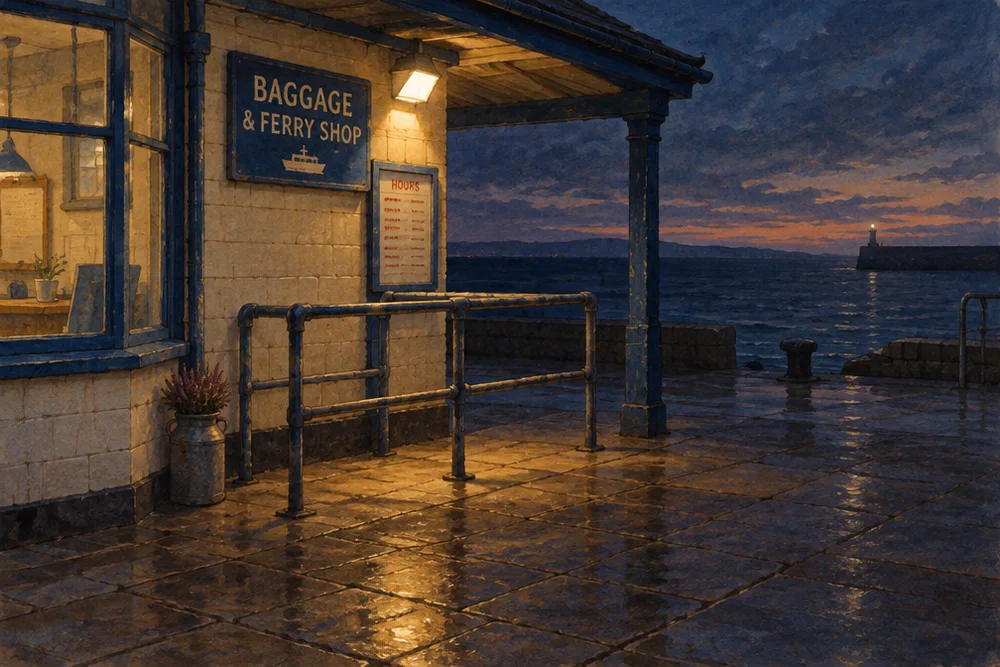
At the turn toward the harbor wall, she looked back. Ivo had left the entrance lamp on. Its small square of light fell across the empty boards, catching the red lettering on the hours sign. Orla felt the day’s failure and its modest success settle together inside her. The shop had not saved itself. It had found a first boundary, and a place to begin.
The next morning, Orla returned before the harbor traders began unloading. She carried a clean sheet of paper, a ruler, and the first copy of the loft agreement. Ivo was already there, setting out the collection rail. He had brought a small wooden sign he had made from scrap.
“You made that?” she asked.
“It’s a board with letters on it.”
The letters were straight, painted in dark blue. COLLECTIONS was written at the top, with the hours below. At the bottom, in smaller writing, it said: For fittings, please ask. We can arrange access where possible.
Orla ran a thumb over the edge. “This is good.”
“You can say it’s good without paying me extra.”
“I wasn’t going to.” She set the paper down. “I’ll put it in the agreement that you made the sign.”
“That’s not necessary.”
“It is if I want you to make another.”
He smiled, then looked toward the quay. “Any word from the woman with the coat?”
“I’ll write to her now.” Orla took out her pencil and began. She offered a private fitting upstairs at a time when no other customers would be there, or a home visit if the woman preferred. She made no mention of the day’s lost appointment. She did not ask the woman to help prove the shop could work.
Ivo set the rail where they had agreed, just inside the door but clear of the passage. “You’re not going to keep the workroom shut all day?”
“The carpenters are repairing the sill. I’ll go over after lunch.”
“That’ll be enough.”
“You don’t know how long the repair will take.”
“No. But I know you can’t be in two places at once.” He tapped the hours board. “That’s why there are hours.”
Orla placed the new sign beside it. The words were plain and unadorned. She could have drawn a needle or a pair of scissors, but she liked the certainty of the schedule. A customer could read it and know when she might be helped, and Ivo could read it and know when he was expected to work.