The House We Could Move
Page 167 of 217
Chapters
The board questioned the figures for nearly an hour. One member wanted the public dues to cover all of it. Another wanted the cooperative to pay for the lower stretch. Mair asked for the estimate to be read aloud, line by line, and stopped two people when they began arguing from memory instead of the written amounts.
Orla waited. She answered when asked, and did not volunteer to pay more just to make the room quieter. Each time the word house came up, she felt the impulse to explain how many years she had lived in it, how the bay window had faced the old ferry lane, how the kitchen tiles were still stained at the edge from the tide. None of that changed the dimensions of a stretcher or the price of crushed stone.
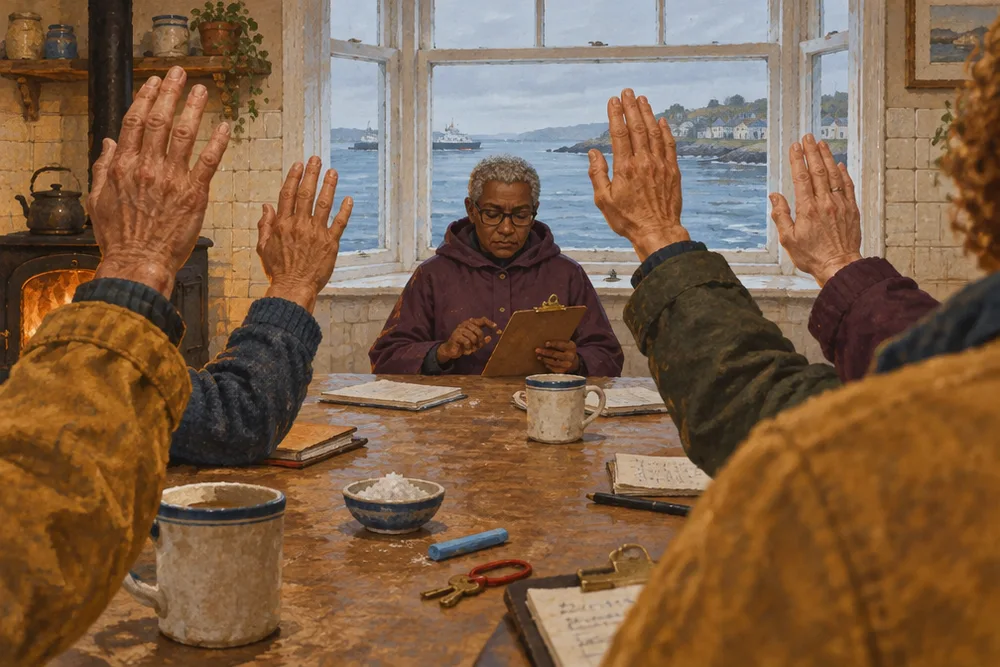
At last, Mair closed her copy of the estimate. “The motion is to fund the public works from landing dues, accept the capped shares from Sella Marr and Orla Elwick, and commission the maintenance rota before the next high-water season. All in favor?”
Hands rose, some after a pause. The brown-capped man’s came last. Mair counted, then announced the motion carried.
Orla let out a breath through her nose. The relief was not happiness, not yet. There would be invoices, work crews, inspections, weather. But a line had been drawn between the public path and the private cost of her home, and the board had agreed to respect it.
Mair set down her pen. “The contract can go out tomorrow. No license is issued tonight. The route must be completed and inspected before the residential vote.”
“Understood,” Orla said. She wrote that down in the margin, though she knew she would remember.
Sella came over while the board members gathered their coats. “I’ll sign the cap,” she said. “My people need the lane more than they need another month of complaining about it.”
“Thank you.”
“Don’t thank me yet. If the rota has us hauling gravel every market day, I’ll object in public.”
“That seems fair.” Orla offered the cost sheet. Sella looked it over, checked the upper and lower sections, and tapped the division with one gloved finger. “This. Keep this in the agreement.”
Orla took out her pen. The paper was damp at one corner from the room’s condensation. She wrote the cap into the draft beside the two names, then read it aloud before signing. Sella signed beneath her. There was no flourish, only the compact, practical mark of someone who knew a signature could be called on later.