The House We Could Move
Page 150 of 217
Chapters
“And if the board declines the public portion?”
Orla glanced at the proposal. This was the part she had worried over when she could not sleep. “Then the path cannot be represented as suitable for regular access. I would not ask for a residential license on a route the board hasn’t funded to a usable standard.”
The room went quiet for a moment. It was not the answer she wanted to give. It was the answer that made the paper mean something.
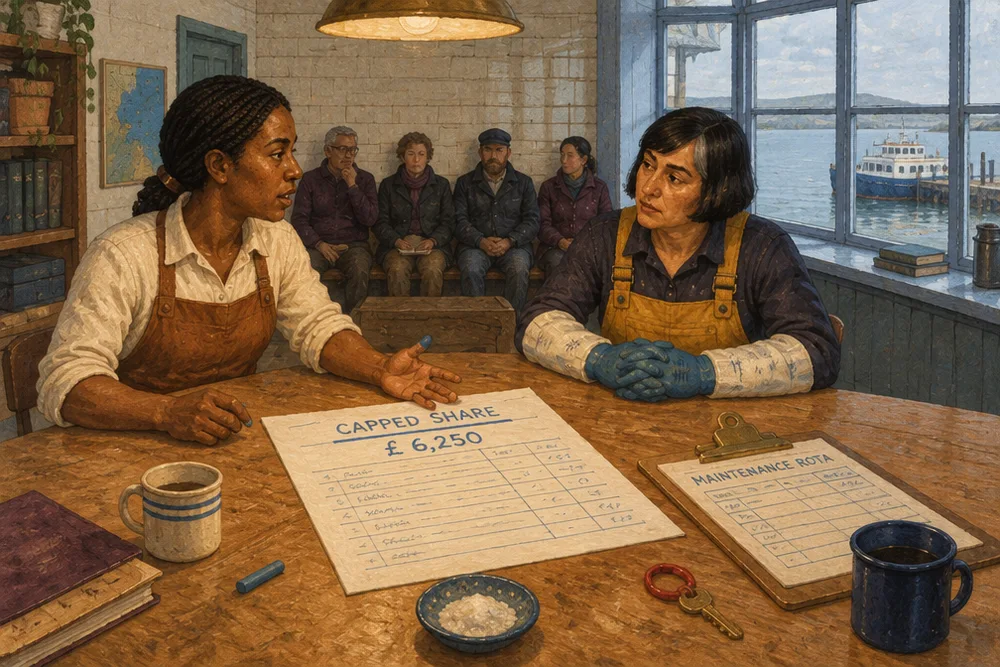
Sella picked up the maintenance page. “This is not a request to clear the way for one resident. We’ve had the delays. The house adds a use, but there’s already a shared route to repair.”
“And if we approve funding, the house still has to pass the access checks,” Mair said. “No license follows automatically.”
“Understood,” Orla said.
Mair made a small mark on the proposal. “I’ll take this to the board as a joint path plan, not as an amendment to your residence application. The landing dues can be considered for the public section. Your capped share and the cooperative’s labor will be listed separately.”
“And the rota?” Sella asked.
“Included as a condition of the funding request, subject to inspection. We’ll circulate it with the meeting notes.”
The quay trader had stopped leaning forward. He was looking at the cost sheet now, not at Orla. That did not mean he agreed. It meant the argument had acquired numbers he could contest rather than a person he could dismiss.
Orla gathered her own notes. Her pulse was still quick, but her hands had stopped sweating against the paper.
After the meeting, the harbor emptied slowly. Orla waited while Sella checked the next day’s launch times with one of her crew. Mair remained upstairs, collecting papers and speaking to the traders who had questions about the dues account. No one had promised a payment. No one had dismissed the plan, either.
On the quay, Sella tucked her ledger beneath her arm. “I can’t tell you what the board will fund.”
“I didn’t expect you to.”
“But the route needs work. We’ll show up for the scheduled labor if the plan passes.”
Orla nodded. “I’ll keep the cap on my contribution. If the work costs more, we’ll have to find another way or reduce the scope.”