The House We Could Move
Page 145 of 217
Chapters
“Does it delay launches?”
“Sometimes. Depends how soft the ground is, how much we’ve loaded, whether a crew has to turn around a cart.” Sella stood and wiped her fingers on her glove. “That’s a different question from whether your house makes the path worse.”
Orla felt the distinction settle, unwelcome and useful. “I logged the market cart yesterday. I was going to report it as a problem with the trial.”
“It is a problem with the path.” Sella opened her ledger. “This is last month’s loading record. Here—Tuesday after market. Two crews lost time because a handcart had sunk at the bend. The house wasn’t here then.”
Orla studied the lines of figures. Sella had written each delay beside the tide and the crew count, no complaint or accusation to pad it out. The record did not excuse yesterday’s ruts. It made them part of something larger.
“If I leave your evidence out, the board can say the house is the whole cause,” Orla said.
“If you leave yours out, they can say the path was bad anyway and do nothing.” Sella shut the ledger. “We need to show what the house adds and what everyone already pays for.”
Orla looked down the slope toward the shared launch lane. “Then we write it together.”
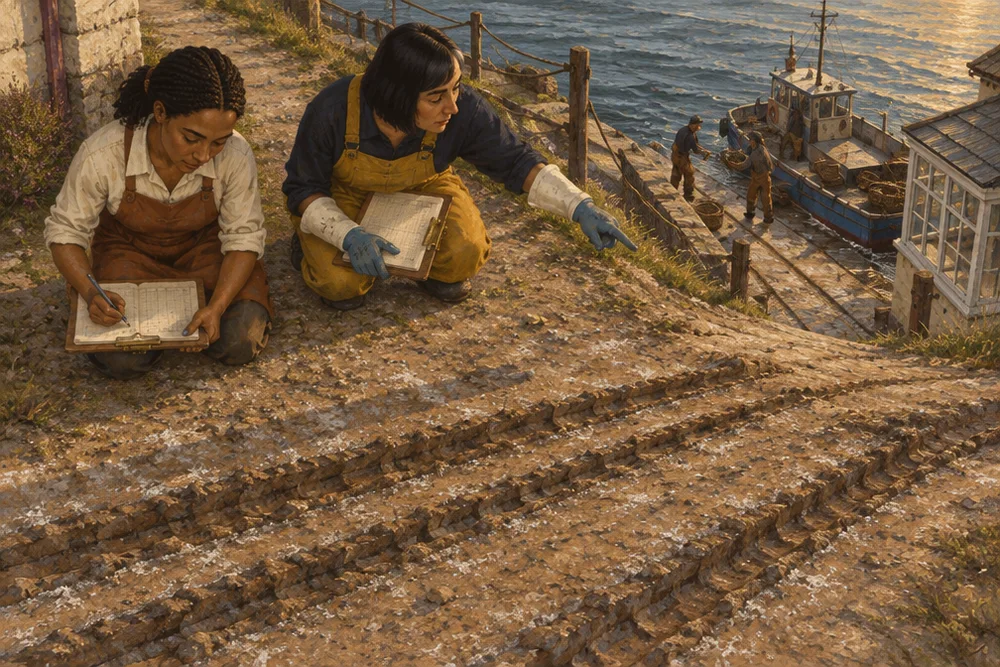
Sella’s gaze moved to her face, weighing the offer. “Together means I get to object to your numbers.”
“It means I get to object to yours.”
“That’s fair.”
They spent the hour walking the route from road to shore. Sella pointed out the places where shellfish crews paused to shift baskets between hands, where a trolley needed room to turn, and where the ground stayed firm even after rain. Orla marked each spot in her ledger. Their first map was a page of arrows and cramped notes, more argument than drawing.
At the lower landing, a crew was loading baskets into a launch. A man called for the trolley to be brought up, and the wheels bumped over the hard strip beside the water. Sella watched the turn, then pointed to the wider track above it. “A cart can pass there without stopping the launch. If the upper route were firm enough.”
“And if people knew it was the route,” Orla said.
“And if it stayed clear.” Sella glanced at the proposed house steps. “You’re giving up the fenced garden?”
“There won’t be a fence.” Orla had made that decision when Mair published both plots for possible licenses. A fenced patch would invite a gate across the public path; she would keep storage inside the house instead. “The path needs to stay open.”