The House We Could Move
Page 133 of 217
Chapters
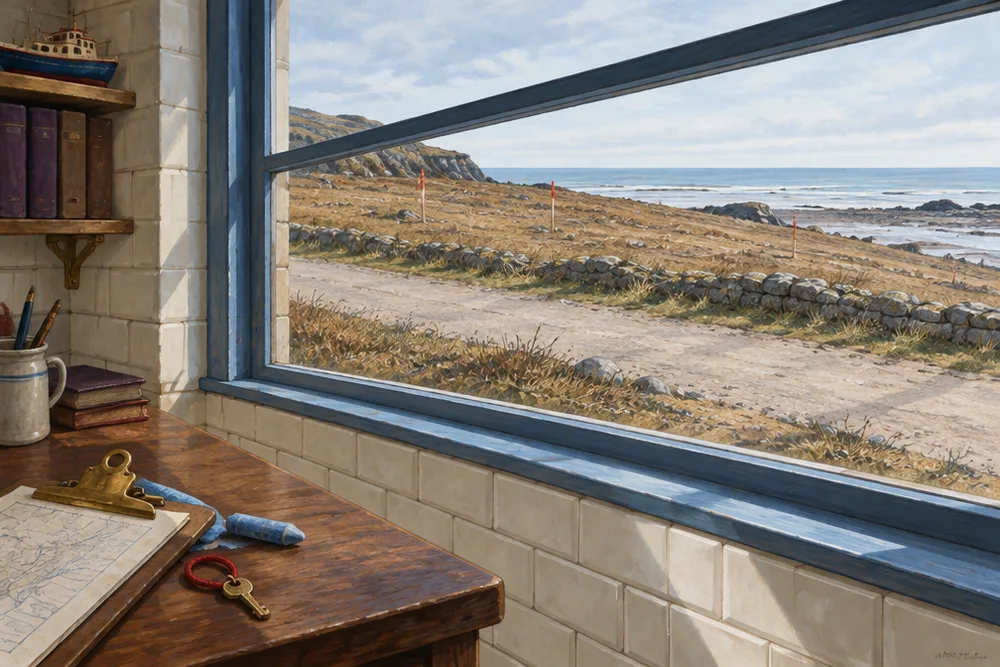
He did not tell her it would be all right. He went back to the deck and spoke to the tug master about the line. It was a small mercy, his not covering the risk with comfort. Orla put her palm against the cutting table’s bolted edge and felt the engine’s vibration pass through the metal. The office was moving, but nothing in it was loose enough to pretend the movement was effortless.
The turn took time. The tug worked at it in measured pulls, the towline rising and slackening as the house swung toward the outer beach. Orla kept her feet apart and watched the angle of the window against the water. She had once believed that keeping a home meant keeping its view. At Wren Strand, she had stood over the survey drawing while the launch trolley’s turn clipped her proposed steps. She had pivoted the house on paper, sacrificing the sea view to leave the public route intact.
Now the same compromise arrived in wood and water. The bay window no longer faced the open harbor. It faced the landward path, the strip above the beach that had to remain clear. Orla could see the path through the glass as the house turned into position: pale, worn, and empty at this hour. Beyond it, the ground rose toward the winter waterline. The west shelf lay to her left when looking seaward, just where the survey stakes had marked it.
“That’s your line,” Quentin called. “We’re bringing her in.”
Orla nodded, though he might not have seen. The house creaked once, the repaired sill holding. She had sold the ornamental ferry canopy to pay for the work that made this possible. The canopy’s absence left a bare patch above the old entrance. She had grieved it less than she expected. A roof ornament could not hold a house together; neither could a view.
The tug moved by inches. On the shore, the prepared bed waited for the office’s weight. Orla watched the path through the bay window instead of the water. She wanted to know where the public would walk, where a stretcher might turn, where a launch trolley might need to pass. The view was not empty. It was simply no longer hers alone.
“Hold there,” the surveyor called from the bank.
The towline eased. The house gave a small, settling lurch, and a shiver ran through the tiles beneath Orla’s boots. She waited for another. Nothing shifted. Outside, Quentin leaned to inspect the line where it met the towing gear. The tug master kept one hand near the controls. On shore, the surveyor checked the marks at the west shelf against the prepared ground.