The Hall of Borrowed Hours
Page 250 of 251
Chapters
Leone sometimes came by after work. He no longer wore the bright brass ring that had made him look like the keeper of every door he could unlock. One evening he brought Nella’s repaired cuff to Yvonne, who had left it on the sewing table by mistake. He handed it over at the threshold.
“She says you should stop trying to mend it with soap,” he said.
“I’ll tell her I have learned.”
“She won’t believe you.”
“Then I’ll show her.”
He was still her friend, though not a clerk she could summon to make an arrangement official. They shared supper once at a small table in a room neither of them controlled alone. They spoke of the quay and the weather, of Nella’s lodger and the yard keeper’s temper, of Mara’s sister’s hem. The hall did not come between every sentence, but neither did either of them pretend that nothing had changed.
Yvonne did not offer him the accounts. He did not offer to take them. Their silence about that work was no longer an awkward gap; it was a boundary they had learned to live beside.
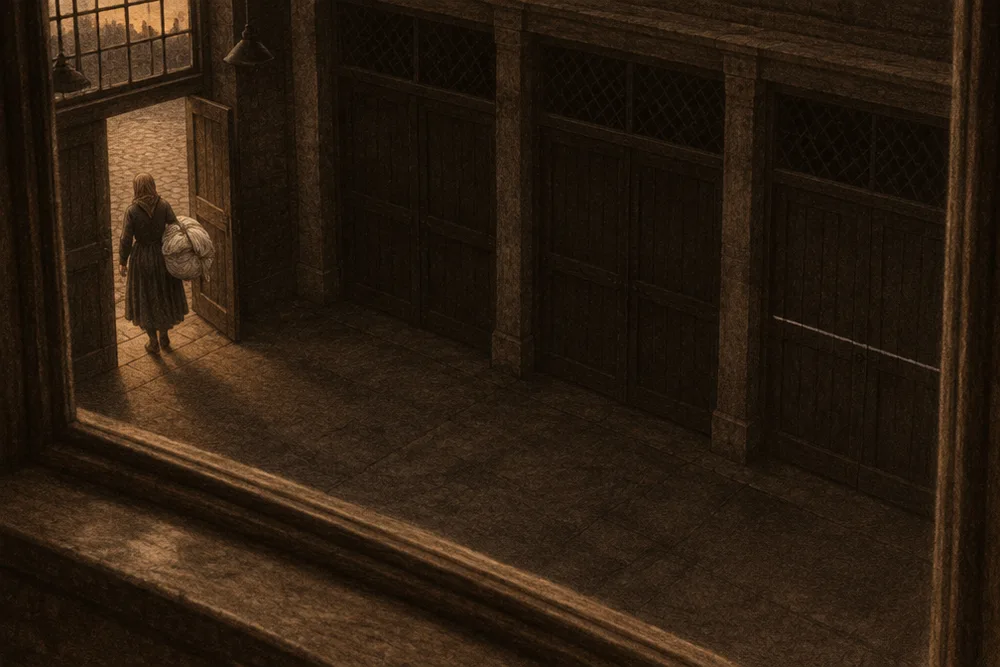
The late washer who had first entered after opening returned often. She began bringing her sister’s linen as well. One night she arrived early and found the hall dark, the key still on the steward’s side of the door. She waited on the step without trying the latch. Dina came a few minutes later, entered her name, and unlocked the bay.
“You could have gone home,” Dina said.
“I had the time tonight.”
“And now you have the turn.” Dina held the door open.
The woman carried her bundle inside. She did not thank Dina for a right; she thanked her for holding the door while the basket cleared the sill. Dina nodded, and the steward shut the door only after the entrance was clear.
From outside, Yvonne watched the lamplight gather in the window. The women moved within the limited bay, tubs, stools, and bundles keeping to the lines they had agreed. The condemned end stayed empty. The room was not spacious, not secure for ever, and not free of argument. But it was in use by people who could question its terms.
Mara played more often after the hall had opened. Sometimes she brought the violin because she wanted to practice where the stone carried the sound. Sometimes she left it at home. No one changed a booking to accommodate her music. No one asked her to play when the room felt tired, or to make a public event of an ordinary shift. The women had learned the difference between inviting and assigning.