The Hall of Borrowed Hours
Page 119 of 251
Chapters
“I haven’t verified the figure,” he said.
Radan smiled with his broad mouth, not his heavy-lidded eyes. “Then verify it. A comparison is a beginning. It is not a funded bid.”
“The hall is already heated at dusk.”
“And who tends the boiler? Who supervises? Who buys fuel next week?” Radan tapped the envelope once. “A warm room is not a budget, Jurić.”
Leone’s pencil rested across the page. “The hall has operating figures.”
“It has washing figures. I want to know whether the town can afford the service when the emergency ends.” Radan’s tone remained mild; he made a point of sounding like a man who had asked only for arithmetic. “If you want to argue that the public hall should remain open, show the money for the hours you propose.”
Leone turned the pocketbook so the figures faced him. He did not push it across the desk. “The public washhouse cannot serve every household at these hours. It has fewer benches than before, and its caretaker goes home at noon.”
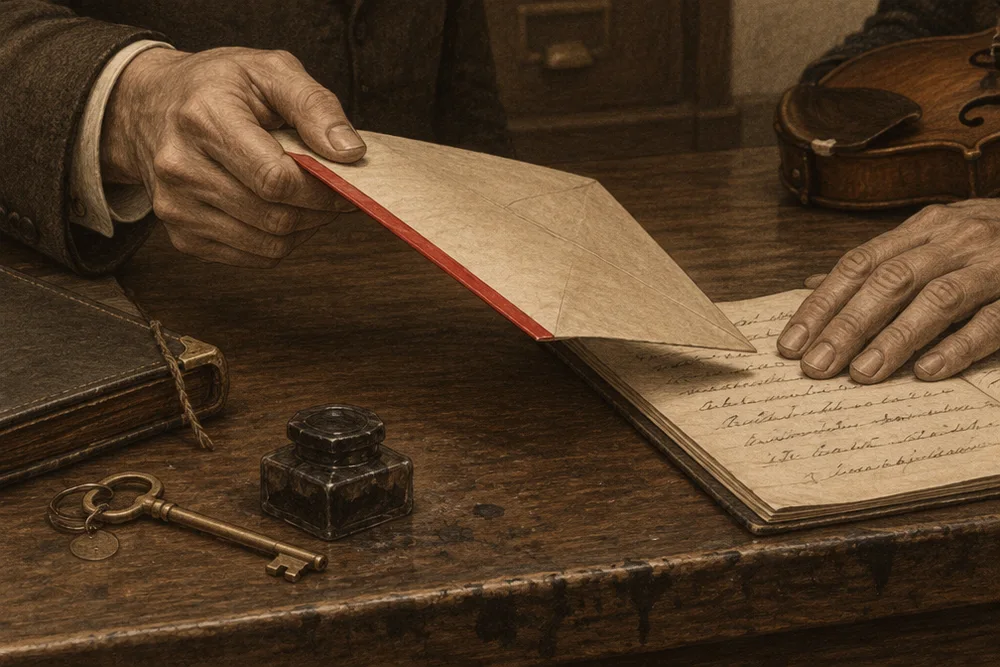
“That may be true.” Radan lifted the envelope and let its red edge flash in the dim office. “It is not a budget.”
“Your concession would have a guaranteed rent.”
“And would pay its staff. It would take the work it can take and charge for it. I have never claimed every household can afford it.”
Leone thought of the young mother’s stool, the too-narrow space, Berto’s hand on the basket. The private scheme’s neatness was precisely what made it persuasive: figures could be set down, prices charged, hours sold. The cost of a woman’s lost turn when she fetched a child did not appear unless someone entered it. Yvonne’s ledger had begun to do that, though its second column had made it easy for Radan to call mutual help a service.
“A public bid can be funded,” Leone said. “The users can pay fees.”
“Can they pay enough?” Radan asked. “Not a hopeful total. Not an account of favors. A funded bid.” He lifted the envelope again. “You have the numbers. Find out what the extension costs. Find out what it costs to open the hall at dusk. Then let the council choose between actual sums.”
He stood, leaving the envelope on the desk. For a moment Leone expected him to take it away. Radan’s hand settled on its corner instead.
“The hall was lent a life,” the councillor said. “It was never promised one.”
Leone looked at the unsigned line on the old emergency license. His own hand had helped place the hall in use, and his own caution had left no authorization there. “I understand.”