The Empty Seat at Low Tide
Page 89 of 257
Chapters
Carys fetched the shop’s battered copier from under a shelf. It had a habit of pulling paper crooked, and the first pass came out with a black band across the top. She swore quietly, adjusted the feed and tried again. The machine clattered through the pages, making the room seem occupied by a second, impatient person.
While it worked, Mabli sat on the stool by the door. The orange bucket rested between her shoes. She had brought nothing else—not a bag, not a coat, not the small thermos of tea she usually carried on morning shifts. Carys wondered how much of the night Mabli had spent deciding what she could risk carrying. She did not ask. The statement to police had already demanded its own answers.
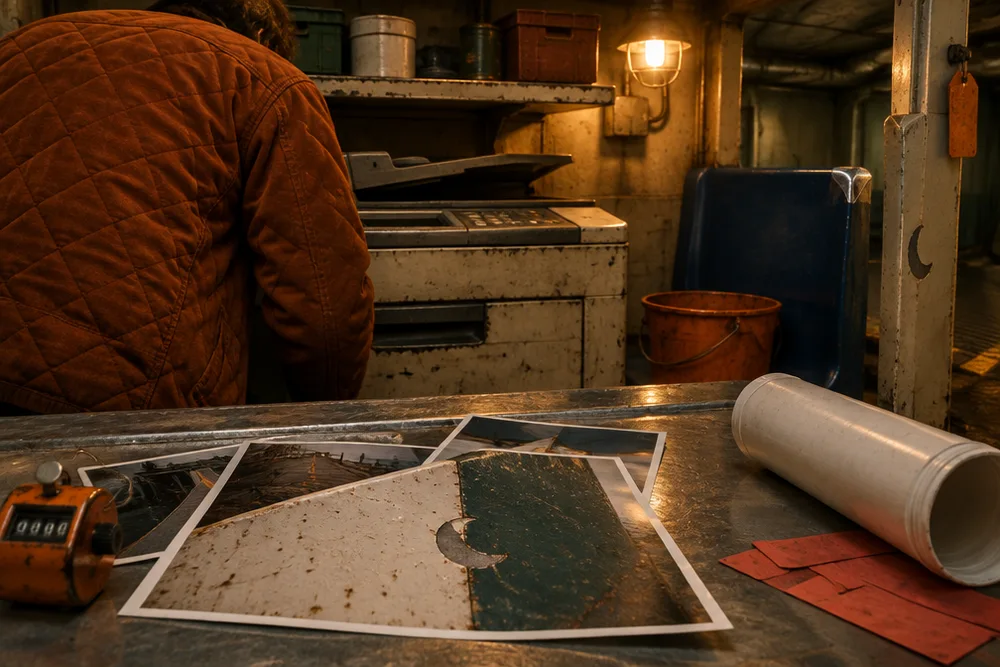
The copy was legible. Carys placed the original and duplicate side by side, checked each page, and set the photographs in order. One showed the underside of the loading ramp, its steel members dark with damp. Another showed the junction where the crack ran from a bolt hole. In the corner, the crescent of paint on the ramp edge identified the spot without anyone needing to trust a label.
“Do you know what this means for the route?” Mabli asked.
“Not yet.” Carys’s thumb polished the counter’s ridged face, once, twice. “I know what it means if I hide it. I know what it means if I send it to the officer. Everything after that will be other people’s decision.”
“That’s better than one person deciding alone.”
Carys slid the original back into the tube. “I’ll read it to the whole room when there is a whole room. For now, I’ll read it to you, and we’ll make sure the duty officer gets the finding before anyone loads that ramp again.”
They moved to the narrow desk in Carys’s office, where the phone had a reliable connection and the chairs did not match. Mabli sat facing the window, with the tube on her lap. Carys laid the copied report flat and placed a mug of tea near Mabli’s elbow. It had gone lukewarm before either of them touched it.
“Full findings,” Mabli reminded her.
“Full findings,” Carys agreed. She began with the inspector’s qualifications, the date and scope of the assessment, and the conditions under which access had been gained. Ivo Trenow had inspected the vehicle loading ramp and its supports. He had examined the maintenance records supplied to him and compared them with what he could see on site. His purpose was to assess repair options, not to certify the vessel or the terminal for continued operation.