The Empty Seat at Low Tide
Chapter 9 · The Route in the Red Column
Page 114 of 257
Chapters
At noon the Brine Room smelled of damp wool and the burnt edge of the clerk’s coffee. Carys stood by the long table with her tally counter in her pocket, though there was nobody to count. The harbor officer’s stop-use notice had been pinned to the terminal door downstairs; beyond the window the loading ramp lay empty, its crescent paint chip bright against the gray metal. The ferry could not move while the crack was unresolved. The board’s Sunday closure vote, however, remained on the noticeboard, and the grant that would reward permanent surrender had not been suspended.
The milk cooperative treasurer, Rhun, arrived carrying a folder swollen with invoices. He had come straight from the cold store, his jacket still marked with a pale stripe of milk powder. Carys laid Della’s grant summary beside the folder. Rhun tapped the red column with one blunt finger. “This money isn’t for another boat, another landing, or a winter bus,” he said. “It’s for closing the route and paying the people off.”
“The board keeps saying the grant protects the crew,” Carys said. “They don’t say what happens to the people who need the crossing.”
“Because the grant doesn’t have a line for them.” Rhun opened his folder. The cooperative’s own figures covered milk collection, not clinic journeys or appliances ferried to the island. “There’s a clause: surrender the lease permanently. If they take it, the money can cover redundancy liabilities. It cannot be converted into replacement transport.”
The distinction sat between them like a bill neither could pay. Carys thought of the customers who brought her broken motors to Nine-Bolt Works because buying new ones cost more than they could manage. The crossing was part of the repair, even when she never rode with the machine. But a ferry that could not safely load vehicles was not a promise she could sell.
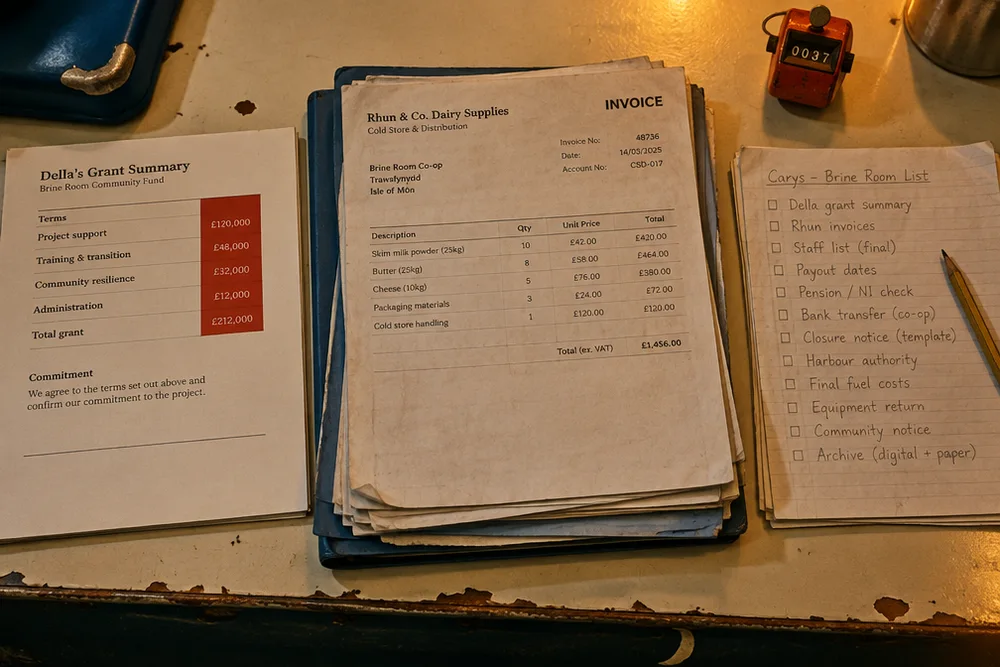
Rhun slid the pages toward her. “If they keep the lease, they keep the risk. And they still have to pay what they owe the crew.”
“Then we find another way through the winter.”
“That’s not in this folder.”
“It has to be somewhere.” Carys took a pencil and began listing the freight customers she could ask. Beside each name she left a blank for the amount they might commit. Her hand stopped at the final line. There were fewer names than bills, and the shop’s winter rent was due whether the ferry sailed or not.