The Empty Seat at Low Tide
Page 255 of 257
Chapters
The checker wrote it down and turned the clipboard so Carys could read the entry. She checked the customer’s name, then signed beside the delivery. The checker did not ask her to click her counter or tell them how many people had boarded last winter. They did not need her to certify the count from memory. Their list showed the crate and the person carrying it.
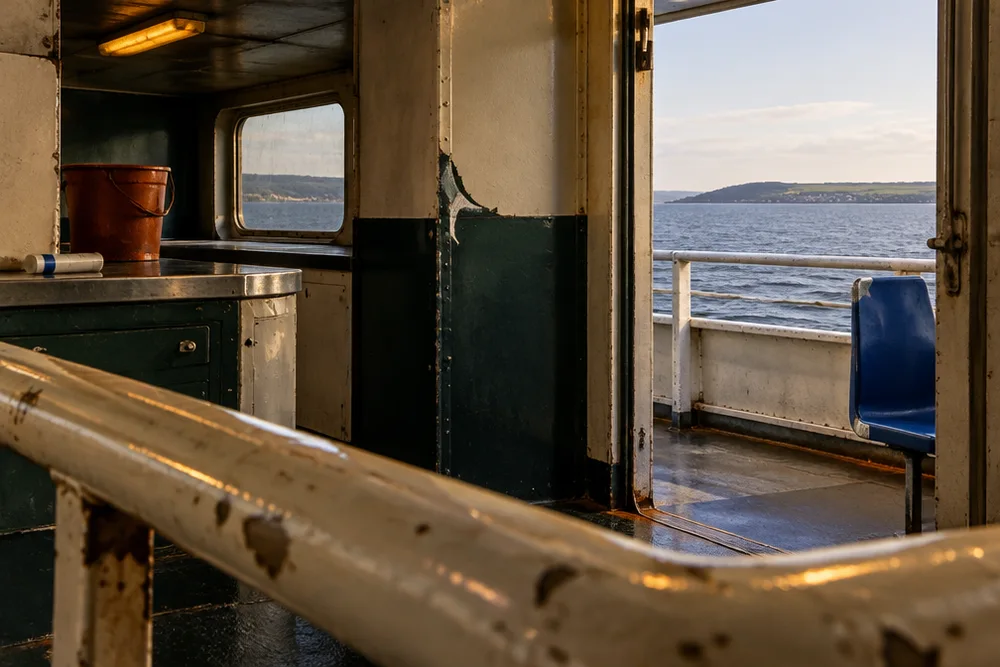
At the passenger gate, the blue seat was visible beyond the open cabin door. Its zinc corner had been covered with a new patch of blue enamel, not quite the same shade as the rest. The patch caught the light differently. Someone had tried to make the seat whole without disguising that it had needed work.
Carys thought of the stranger she had counted off at Shell Gate, and how the missing name had become a trail: Mabli’s empty bucket, the canceled visits, the report, the cracked ramp. The question had been how an unlisted man boarded. The answer had not made the ferry safe. It had only made the truth harder to keep from view.
The checker looked from the clipboard to the waiting deckhand. “That’s the freight count. Any passengers?”
“None yet,” the deckhand said.
The checker left the passenger column blank and wrote a short dash beside it. Carys watched them do it, then picked up the pump crate again.
The ramp passed beneath the crate wheels with a low, steady vibration. Carys kept both hands on the handles as she crossed it, feeling the repaired metal answer the weight without the old shudder. The harbor officer stood beside the landing, watching the first freight load pass. He did not wave them on until the deckhand gave the signal.
Carys set the pump in its marked place and secured it. There was no passenger seat reserved for her and no checker’s stool waiting at the hatch. She was allowed to make the crossing because she had goods to deliver, and the ferry was once again allowed to carry them. The distinction was ordinary. She was grateful for it.
On the way back to the gate, she paused by the blue seat. Its cushion was empty. A passenger might sit there on the next run; a child might claim it, or someone with a basket on their knees. The seat did not belong to the missing visitor or to the story of him. It belonged to whoever chose it when the boat carried people again.