The Empty Seat at Low Tide
Page 239 of 257
Chapters
The tender drew two bids. The new board published both scopes, the cost of each, and the assessor’s notes. The contractor selected had worked on similar ramps along the coast but was not the firm that had supplied the false comparison. The award came with a schedule and a separate requirement for independent certification before passengers or vehicles could use the ramp.
Carys read the notice at the counter. “It says they’ll remove the damaged section first.”
“Yes,” Mabli said. “Then inspect the supports. Then fit the new plate.”
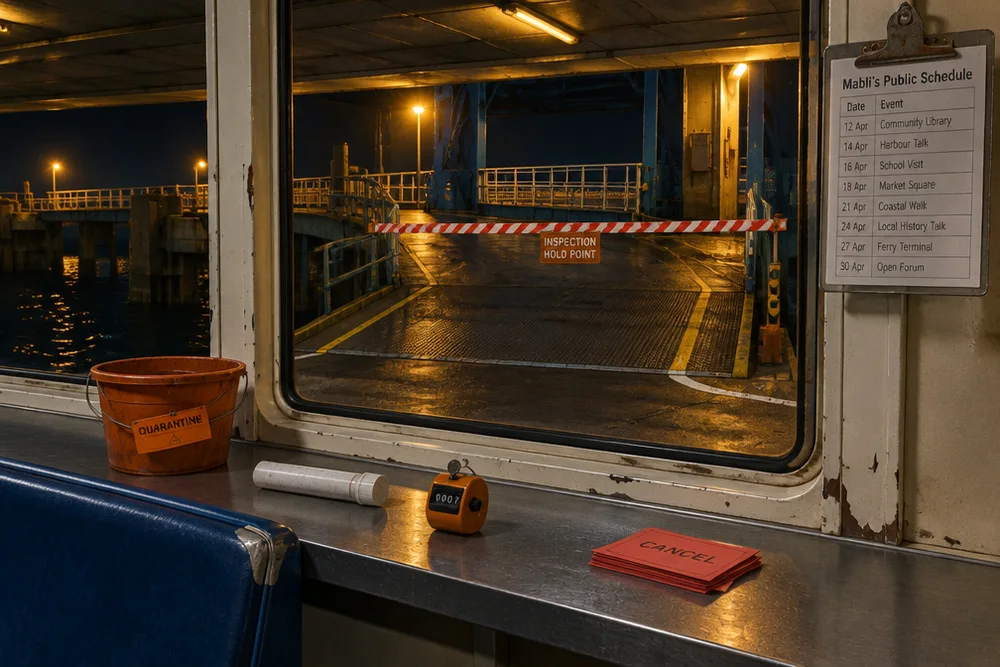
“And they’ve put the hold points in the public schedule.”
“Every stage.” Mabli tapped the printed sheet. “Anyone can see when the work is stopped for inspection. I’m keeping the booking record open beside it.”
The tender did not promise a day the ferry would sail. It did not promise that the spring freight deposits would stay in place indefinitely. The milk cooperative had agreed to hold its conditional payments through the assessment, but not beyond the date written in its agreement. Carys copied the deadline onto her own work calendar.
“If certification doesn’t come in time, you lose the deposits?” Piers asked.
“They can move the freight to another supplier. They’re not a rescue fund.” She returned the calendar to a drawer. “I asked them for an honest condition. They gave me one.”
The repair crew began work while the ramp was empty. Its orange quarantine tags stayed fixed at the junction, bright against the salt-stained metal. The first section was lifted away, exposing the structure beneath. The inspector who had written the stop-use finding did not certify the repair; Ivo attended only as a witness to the earlier state of the ramp.
The work moved in stages. Each time a hold point came due, the crew stopped. Mabli entered the date. Carys watched the first inspection from behind the barrier and did not confuse seeing progress with seeing proof.
The route remained open in the board’s books but closed to sailings. At Net Loft, the foot operator’s narrow service continued when he judged it safe. The tide board still carried the warning about access, and the log still included the people who could not use the steps.
Midwinter wore on. The foot operator’s licensed service carried a few passengers and refused others when the tide or landing made the crossing unsafe. The island remained linked to the mainland in the narrowest sense, but no one who lived there mistook that for ordinary travel. Milk left by the arrangements the cooperative could manage. Clinic patients relied on booked pickups, overnight rooms, and the operator when it suited their bodies and the water.