The Empty Seat at Low Tide
Page 221 of 257
Chapters
When the harbor officer came out, he carried a fresh notice and a roll of orange tape. He fixed the notice beside the showcase advertisement: NO BOARDING. NO MOVEMENT. RAMP CLOSED PENDING INDEPENDENT CERTIFICATION. His handwriting was blocky, meant to be readable from the road. The officer explained that the prohibition covered the ferry’s movement, not just passenger access, and that no sponsor, board member, or crew chief could waive it.
A few people asked whether the prohibition could be appealed. He told them the review process and the evidence required. Someone asked when it would end. He said he did not know. The crowd received the uncertainty with low murmurs, but no one argued that the ramp should be used anyway.
Carys carried the roll of orange tape after he had marked the gate. The sponsor’s photographer had arrived, camera hanging against his chest. He looked from the sign to Rhys, who shook his head once. The photographer took no picture.
“What about the showcase boards?” the officer asked. “They’ll keep sending people here if they stay up.”
Carys glanced at the bright printed notices. “I’ll take them down.”
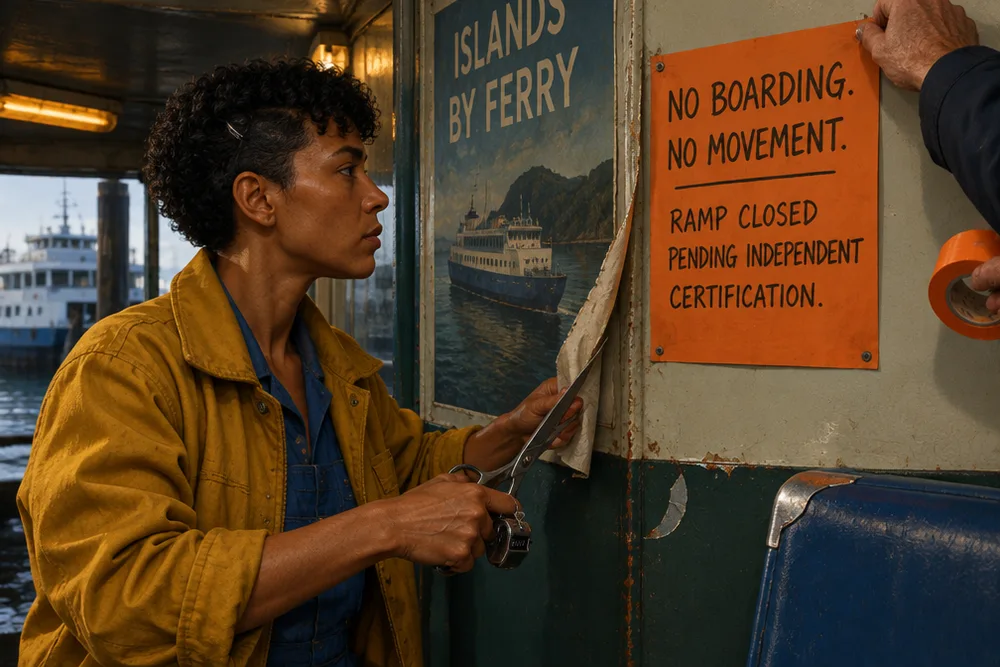
The officer gave her the cutter. She passed it through the first ties. The paper came loose with a brittle rasp. A woman in the queue reached to catch the corner before it blew into the road. Carys handed her the bundle. Together they gathered the remaining signs, including one fixed high on the post with two staples.
Each one showed the ferry in clean light, the crossing empty and calm. Carys had seen the same image on posters for years, as if the route always had room and time for whoever needed it. She folded them face inward.
A man waiting to collect a parcel offered to carry the signs to the terminal office. Carys thanked him and kept the pile herself. The board chamber upstairs was closed, but the office clerk would know where to store them. She did not want the papers tossed carelessly in a bin; the route’s public story had already been edited enough by people who thought they could choose which facts mattered.
The officer pointed out the fixed crescent chip on the loading ramp, visible through the rail. The orange tape ran beyond it, sealing the ramp junction. “That’s the area the inspector marked,” he said. “No one crosses it until the independent assessor signs off.”
Carys looked at the chipped paint. She remembered the detail in the report, the line that came after repairable. She had read the finding aloud, with the public microphone on, and then sent it to the harbor officer. It had cost the route a sailing before it could cost it anything else. That was the right order, even if it made the next weeks harder.