The Candle Map of Quarter Street
Page 65 of 188
Chapters
When Wren had gone, Pike locked the door and turned the sign to CLOSED. Edith gathered the map from the counter. She could still see the scrap in Kit’s hand, the scorched edge and the wet smear where wax had blurred the writing. The original key, whatever names it had carried, was gone for good. No careful search of the shop or Martha’s room would bring it back.
Pike stood with his back to the door. “You told him the key was missing.”
“It is.”
“And you don’t know who took it.”
“No.”
“Good.” He crossed to the rental press and checked its lock. “That’s what you know.”
The simplicity of the words hurt more than she expected. “I should have made the recall notice from the books, not the account.”
“The notice was meant to bring books back.”
“It brought Wren to houses.”
“He was coming regardless. That’s the point of the inspection.”
Edith unwrapped the map again. “Not to every house on a borrowed list.”
Pike looked at her for a long moment. His square face appeared tired in the late light, the brass buttons of his waistcoat dulled by years of handling. “I wanted you to learn the shop well enough to keep it,” he said. “Not to mistake a list for the people behind it.”
“I did.”
“Then don’t do it twice.” He went into the back room, leaving her with the words.
Edith set the map flat on the counter. She would not try to reconstruct the missing key from what Kit might remember. She would not read the visible marks aloud to Wren as if a candle’s place named a person. When she returned to the borrowers, she would ask what a host wished to offer, and what could be said without exposing a lodger or a room.
For now there was no answer to the old levy, no way to distinguish every past payment from every household contribution. The stock could be counted. The candles could not be made into a list without changing what they had meant.
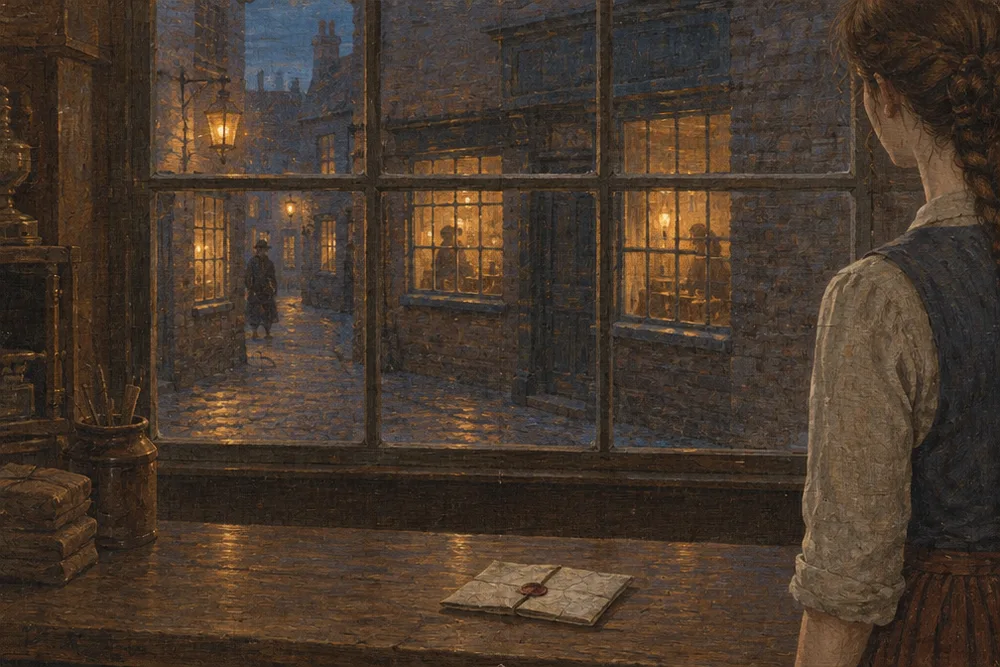
Outside, the mill district settled into evening. A window glowed above the opposite roofs, then another below it. Edith folded the linen map along its worn lines, careful not to press down on any wax bead. Its marks remained, but they would have to be read differently.
The key was gone. The work was still hers, though not hers alone.