The Candle Map of Quarter Street
Page 188 of 188
Chapters
At the turn, Wren’s rooms came into view. His window was above a narrow shopfront, its sill pale with daylight. A candle stood behind the glass, unlit. The place where the last candle had once appeared was quiet. It had been evidence, and a private memory, and a mark pointing back toward a man who had read after late shifts. It was not a standing promise that anyone could knock.
Edith did not knock. She did not need to test whether the old inspector had a book open or whether he would admit her. Wren had signed his name to what he knew and accepted the consequence of the old paid branch. His testimony belonged to him. His window belonged to him, too.
Below, at the bend, the mending room’s lamp was lit. It was not yet one of its posted evenings, and the door was shut. The light came from the little lamp in the front room where Nell had gone to mend a torn apron before her shift. Edith could see her silhouette move once across the glass, then settle at the table. It was not an invitation, and it did not have to be.
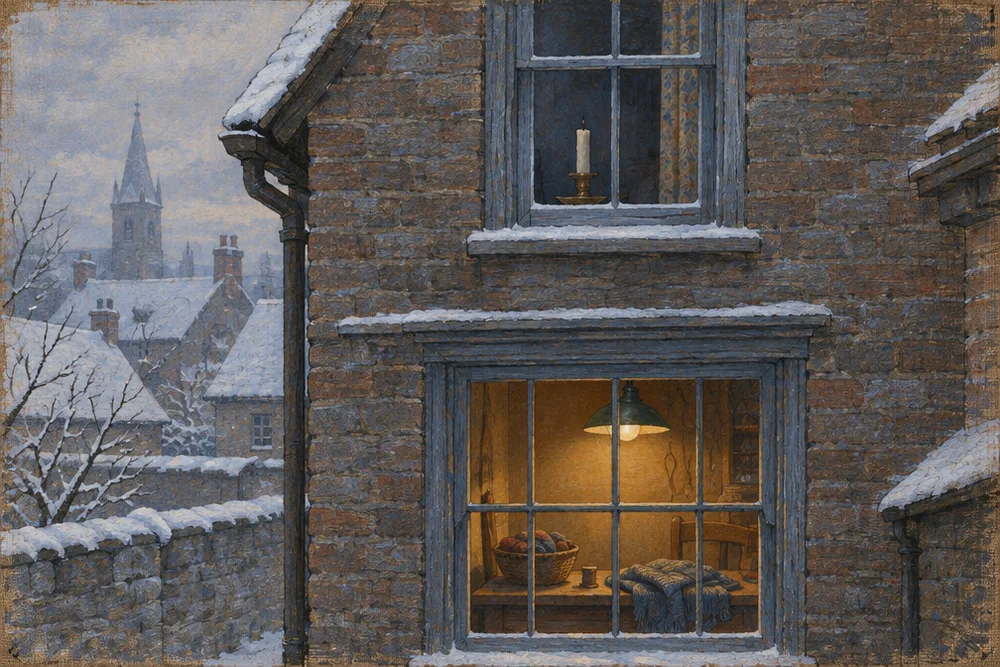
Tomorrow, the room would open at the hour on its card. If the lamp burned then, someone would be there to receive the readers who chose to come. If a household window shone elsewhere, no one could claim the light as a summons. The difference seemed small until it was not.
At Pike’s, the rentals would be counted and the shop’s license kept. In the room, the donated books would be available without fee. Edith would continue to work for Jonas Pike, and Nell would take her own watch. Kit would read when his hours allowed. Martha would keep the old map with the book that protected it. No single one of them carried the whole arrangement, and no single absence could make all the lights go out.
Edith descended to the public room. She had no key in her hand, but she could see its lamp below, steady behind the glass. Quarter Street climbed into the darkening evening above her, its windows bright and dim by their own household rhythms. She turned toward the open room, where the posted hours were plain, the door had a latch, and the welcome did not ask to be mistaken for a promise.