The Candle Map of Quarter Street
Page 134 of 188
Chapters
They tried the schedule against actual journeys. Wednesday could begin after the first shift change, when the mill gate emptied but before the later workers went in. Saturday could be earlier, when some had a half-day and the rest could still come after supper. They would not promise a vigil until they had learned whether anyone could reliably keep one.
“And the walk from the gate?” Agnes asked. “Some won’t come alone after dark.”
Nell answered first. “Pairs. We can meet at the corner by the pump. No one waits there by themselves if the other person is late; they go home, or they come in daylight next time.”
The simple rule steadied Edith more than a map would have done. It gave no address to anyone who had not chosen to come. It did not claim the streets were safe. It only made it possible for two people to choose a road together, and to refuse it if they wished.
Edith wrote the meeting place, then paused. The pump corner was public and easy to find, but there was no need to print it as if it were an instruction to the entire district. She placed the information on a small sheet intended for the people who had agreed to the arrangement, not on the noticeboard outside Pike’s shop.
“We can put the evenings on the room door,” she said. “No names. No home addresses.”
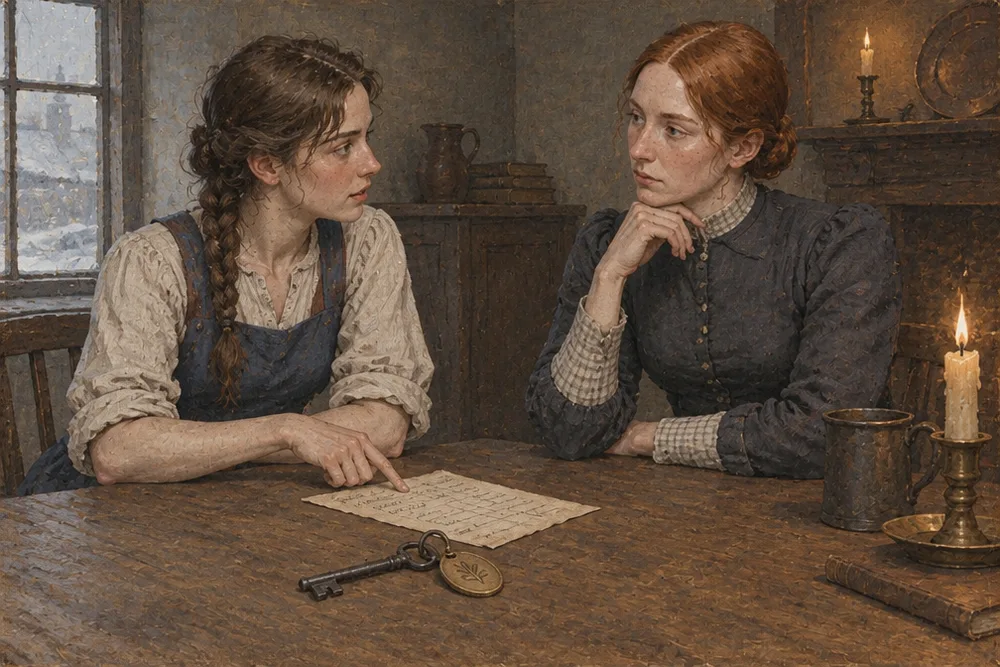
“And don’t make the door sound like a summons,” Nell said.
“It won’t.” Edith heard the certainty in her answer and hoped she could keep it.
The trial ended with the room swept, the cups rinsed, and the chairs returned to their uneven places. Edith carried the empty kettle out to the yard pump. The water came slowly, cold enough to sting her fingers through the handle. Beyond the cooper’s fence the lane was darkening, though the western strip of sky still held a dull copper light.
Nell checked the latch behind them. “The two evenings are possible,” she said. “Not comfortable. Possible.”
“That is more than we had this morning,” Edith answered.
“It’s less than the crowd you were picturing.” Nell looked toward the mill roofs. Smoke drifted low over them, the evening air pressing it down. “A crowded room is not proof of a good room. It can be proof that somebody has promised too much.”