The Block Beneath the Fold
Page 91 of 286
Chapters
Ivo returned the sheet to the folder, and the folder to the counter. The archive had given him a cause, not an answer.
He went back through the linen bills. The one with the sketch was dated to the final week of depot operations. A second bill recorded the purchase of racks, a short roll of heavy cloth, and two sets of brass grommets. The quantities did not match ordinary laundry handling. He noted them, but did not let himself build a mechanism out of a receipt.
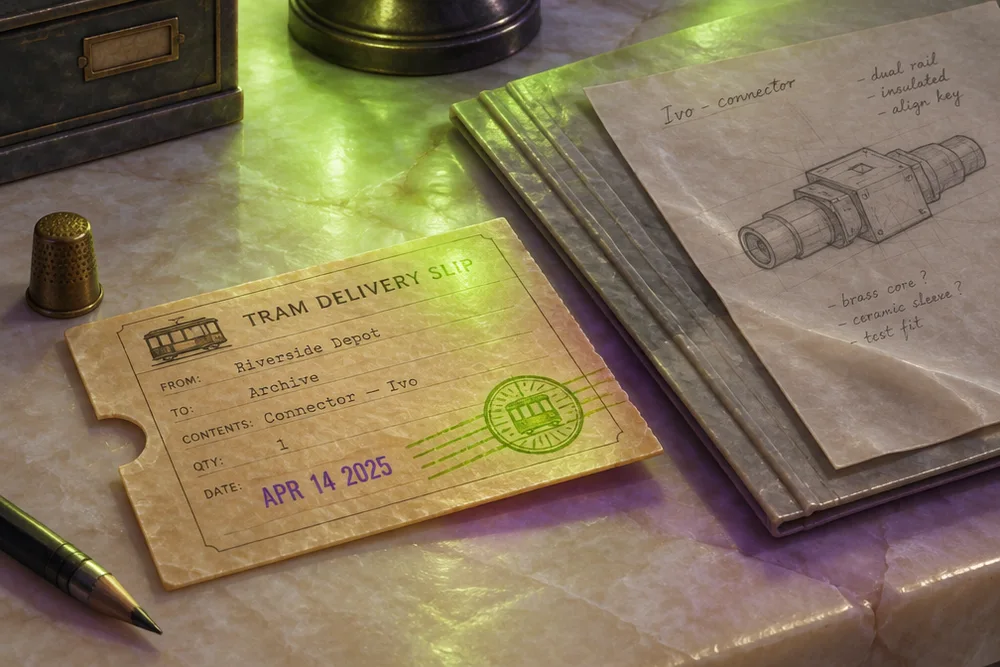
At the edge of the bundle, he found a separate delivery slip for a tram platform. It listed a bench, a punched-ticket roll, and a replacement handle for a counter. The destination field had been overwritten. The original ink showed two letters beneath the new address: T.R. The clerk could not identify the destination, but the date aligned with the last recorded service to the absent block.
Ivo had seen the ticket Mara brought from her sheet. The crescent punch was the same kind used at the Turn Office’s oldest counters, though the blunt violet date did not fit a current route. On the slip, the platform’s ticket stock was listed as locally printed. Somebody had been running service after the official records stopped acknowledging the stop.
His hand paused over the page. He could take the evidence to a supervisor and ask for an investigation. That would turn a vanished route into an official matter, but it would also put the working drawings into circulation. He had no idea who lived in Tuck Row, who might be endangered by a public address, or whether they wanted the city to find them.
He had promised Mara he would bring back what he learned. He had not promised to make a report.
He copied the document numbers and left the slip where he had found it. Then he requested permission to photograph the sketch. The clerk refused. Ivo asked for a certified copy. The clerk said the office did not certify informal diagrams.
“Then I’ll have to carry my own notes.”
“You’re carrying those already.”
“Not all of them.” He gathered his notebook and folded his copied sketch once, keeping the drawn connector on the inside.
The depot doors opened onto Rusk Street, where the morning traffic had thickened into a steady grind of wheels and wet paving. The ordinary tram stopped at the corner, rang once, and continued. Beyond its shelter stood the blank return: a strip of brick wall, a narrow service gap, and a patched stretch of pavement no wider than a doorway. Anyone passing could mistake it for a forgotten loading entrance.