The Block Beneath the Fold
Page 286 of 286
Chapters
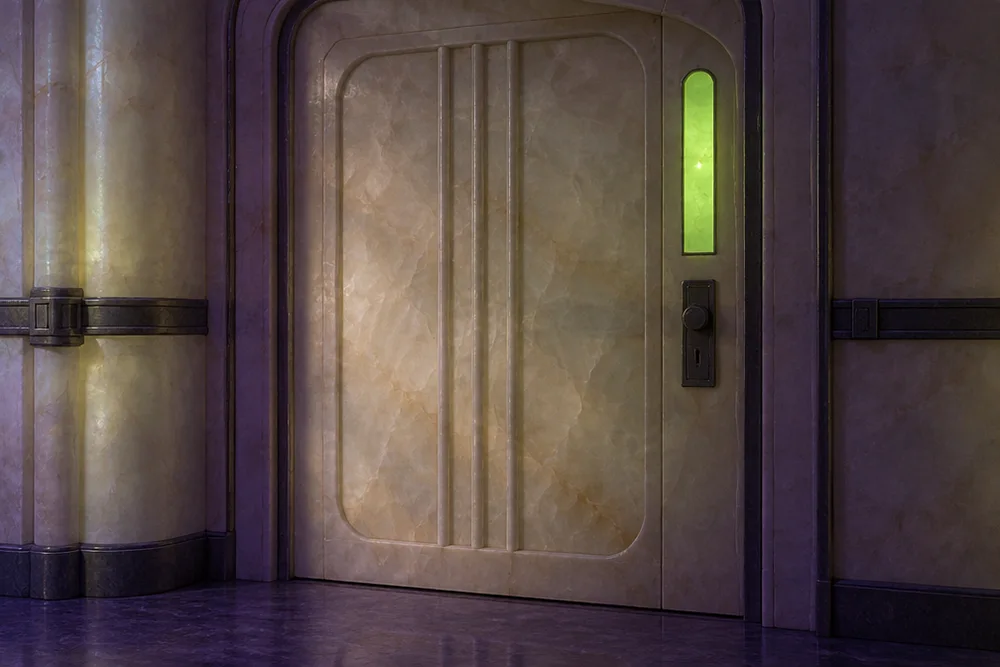
In the morning, the kettle would boil again. There would be a sheet to fold, a crossing to share, a door that needed to open and close at the right times. Some days the freight would run late. Somebody would leave a parcel in the wrong square. A hinge would loosen, a handle would need replacing, a neighbor would have a question that could not be settled by a line on a plan.
The answer would not always be Mara. That was not a promise that nobody would need help; it was the difference between a home and a work assignment. Len had his own choices and his own way of asking. The Tuck Row neighbors had their workroom, their homes and their terms. The people in Lint House had laundry to mend and shifts to make. An opening could connect them without requiring anyone to become the whole crossing.
Mara lay in the dark with the kitchen’s violet shadow under the door. From the other side of the building came a tram’s distant bell. The sound traveled through the joined block and out toward Rusk Street, ordinary enough now to belong to the morning it announced.
She thought of the smooth pucker in the first sheet, the one missing seam that had held a ticket warm against her thimble. She thought of how long she had taken a blank place as an instruction to fill it. This time, the work had been shared: a room offered with consent, a passage measured and bounded, a private door kept private. The blank on the public card had become a stop, not a list of names.
In the room beside hers, Len slept behind his own latched door. In the passage, the clear square waited for its posted hours. Somewhere on Tuck Row, a shopkeeper would unlock a counter; somewhere above, a child would wake and ask for breakfast. Their mornings would come separately and meet at the crossing when they chose.
Mara closed her eyes. The folded sheet in her drawer would still be there when she woke, its four corners flat. Len’s would be on his bed, because he had put it there himself. The kettle would boil when one of them needed tea, and neither of them had to be first to everything.
The house settled around its doors, each one held by its own hinge.