The Block Beneath the Fold
Page 158 of 286
Chapters
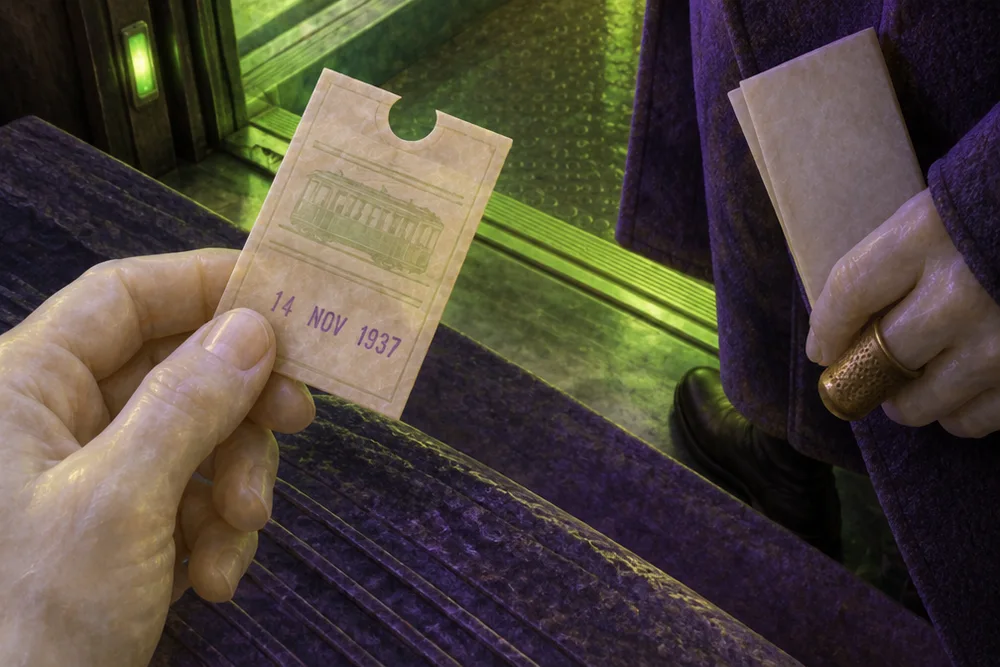
By late morning, the meeting had produced more conditions than agreement. The shopkeepers wanted a public stop card with the row’s name and consenting shop names. The upstairs residents wanted no household information on any public material and a chance to mark the restricted plan before it went to transit. Neri had offered the exchange frontage for the far threshold, but not her workbench. No one had agreed who would steward the passage, how deliveries would be scheduled, or who could close it if the rules were broken.
Ivo gathered his papers. He kept the public card folded, its blank face showing. He had come expecting to draw a workable route that could satisfy both ends: a visible stop for the shops, a private plan for the people who lived above them. The second drawing was still only an idea. The people who might have to use it had not yet given him permission to make it real.
“You’ll bring us a draft,” Neri said.
“A draft for comment.”
“Not to the office.”
“Not until you’ve seen it.”
“And if we don’t agree?”
“Then I don’t publish it.”
She watched him a breath longer, then nodded. “That’s a sentence I can use.”
At the stair, Olin called after him. “When you make the card, put the tram mark on it. Not just the name.”
“Why?”
“So people know it’s a stop.” Olin held up the ticket he had been carrying in his lunch tin, its crescent punch plain in the green light. “A name can be a shop. This means the tram comes.”
Ivo nodded. “I’ll put the mark on the stop card.”
Olin pocketed the ticket. He did not ask when he could ride into the city. Not yet.
On the way back through the crossing, Ivo carried the working sheet instead of the route card. Mara waited at the upper landing with the front door braced open. Her gaze went first to his hands, then to his face. The old question about whether the crossing had held was no longer the only one she needed answered.
“What did they agree to?” she asked.
“Neri offered the exchange frontage for the far threshold. She won’t move her workbench or have it shown as shared floor.”
Mara’s shoulders eased a fraction. “That sounds like Neri.”
“The shops want a public stop card. The upstairs residents haven’t agreed to the drawing. They want to mark it before transit sees it.”
“And you?”
“I said they could.”
Mara let the door rest against her shoulder. A violet shadow from the stair lay across her apron; the green light held at the threshold. “So you have consent to test a route, not to publish it.”