The Block Beneath the Fold
Page 148 of 286
Chapters
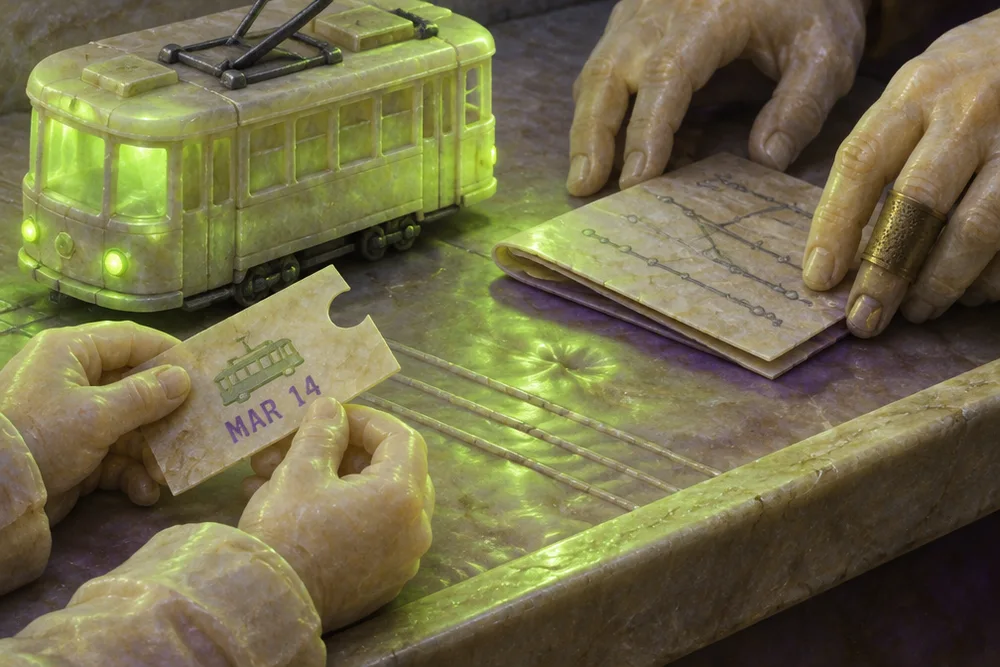
“No household addresses,” Ivo said. “A stop card can name Tuck Row and the Heel Exchange. A working drawing can show the crossing, the clear route, and the doors that must stay shut or open. It doesn’t need names.”
“Shop names,” the boot customer insisted. “We’re not asking to hide.”
“Some of us are,” Neri said. “The upper families didn’t come down to be counted.”
That answer stopped the conversation for a moment. The shopkeepers had gathered because their customers came and went through the row’s shops, and because the one-stop tram still ran whether or not a public card admitted it. Upstairs families had other reasons to stay away. Ivo knew some of them by sight from the landings: a woman with a toddler, two brothers who carried laundry between floors, an old man who sat behind a window that faced a wall. He did not know their names. That was the point.
“They know we’re here,” the baker said. “They buy from us.”
“They know us,” Neri replied. “That is not the same as agreeing to be listed.”
Olin had taken a stub of chalk from the counter. He was drawing a small tram on the edge of a wrapping sheet, wheels like uneven circles. “If the stop’s on the card, can I take the city tram without somebody asking where I live?”
“A route card won’t have your address,” Ivo said.
“But people will know where it goes.”
“They’ll know the stop.”
“Same thing, if they ask the right person.” Olin’s chalk moved. “I want to see the river tram. I don’t want a stranger knocking on my mum’s door because they saw me go.”
Ivo looked at the child’s drawing. He had treated the problem as a matter of scale: a public line here, a restricted line there. Olin had put a human route inside both of them. “That’s why I want the two drawings separate,” he said. “The public one gets the stop and the shops that consent. The working one is for people who need to maintain the crossing. It carries no household names and stays with the stewards and the transit office.”
“Transit office,” said Neri. “The people who made the block disappear.”
Ivo did not defend the office. “Yes.”
The door at the far end of the row opened, and two residents came down from the upper homes. One was a narrow-faced woman with a basket of mending. The other carried a little girl asleep against his shoulder. They stopped just inside the shop, where the counter made a boundary between them and the meeting.