The Block Beneath the Fold
Page 136 of 286
Chapters
“We could make the door swing into the recess,” she said. “That clears the turning space.”
Len rolled himself through the doorway and paused in the hall. “And what does that do to the hall?”
“It leaves the stair clear if the door’s opened all the way.”
“If.”
“We’d mark the floor and test it.”
He looked at the narrow landing. “Good. No guessing.”
Mara wrote the condition on the back of her measurement sheet. Her pencil stopped after the words test the door. She had begun to list work in the order that made her own worry smaller: wardrobe, bed, hinges, inspection. Len’s order was different. First establish what let him move; then decide what had to be bought or moved; then see whether the flat could hold it.
“Will the wardrobe come apart?” he asked.
“Most of it.”
“And the patterns?”
“I can keep those in the workroom downstairs.”
“You use that room?”
“For fitting when I have a large job. Not every day.”
“And the buttons?”
She hesitated. “I don’t know yet.”
Len nodded. He did not ask her to throw them out. “Then they’re part of the decision too.”
For a moment Mara was embarrassed by the smallness of her answer, the little box of buttons against the scale of moving him from Birchstep. Then she understood that he was not minimizing his need. He was refusing to let it erase hers.
“Let’s see the bed position again,” he said. “With the door open.”
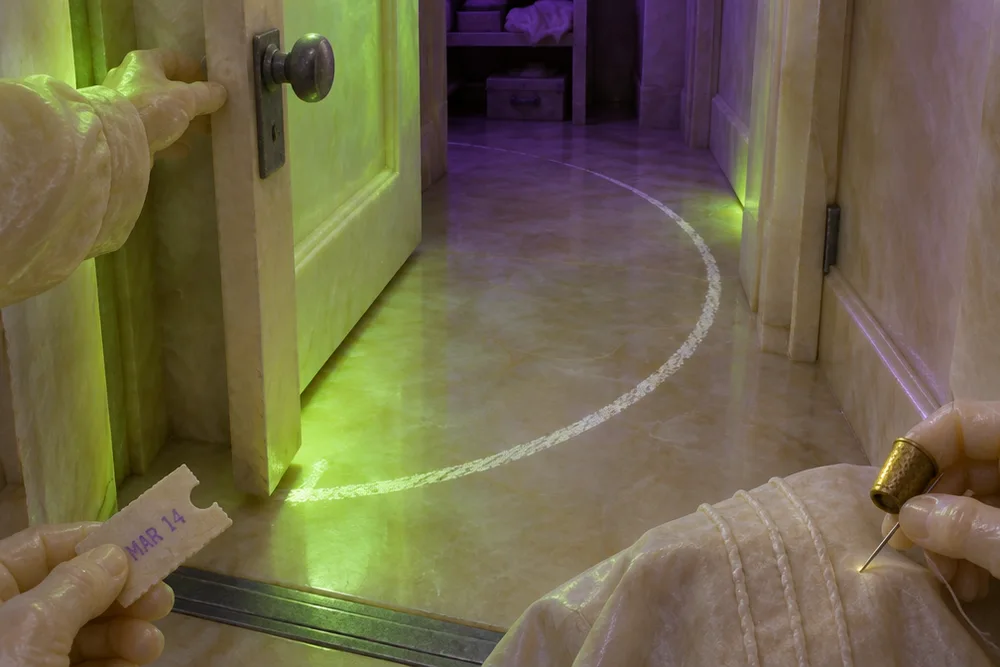
They returned inside. Mara held the door outward while Len rolled through, then let it rest at the open angle. Its edge settled into the recess without blocking the stairs, though the gap between door and wall was narrow. The room felt different with the entrance clear. The floor no longer ended in the door’s broad inward sweep.
Len backed toward the bed, turned, and approached the bedside. His wheels followed the chalked path they had marked. He paused at the point where the wardrobe rail had caught him earlier. Without the wardrobe moved, the route still pinched.
“We can’t judge this until it’s gone,” Mara said.
“We can judge the bed and door.” He tested the reach again, then drew back. “Those work better.”
Mara added a note beside her rough diagram: wardrobe removed; bed against side wall; outward door into recess. She wrote the words in a square hand she used for job tickets. The note looked more certain than the arrangement was.
“Could I put the small dresser on the opposite wall?” she asked.