The Block Beneath the Fold
Page 133 of 286
Chapters
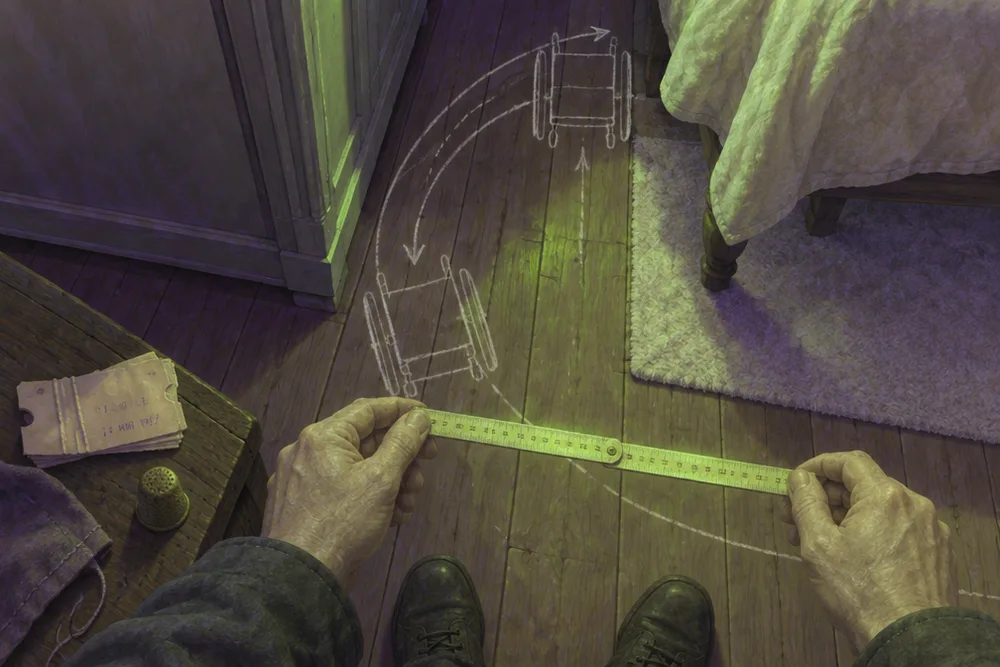
She drew a breath through her nose. “I can remove the wardrobe.”
“You’ve said that.”
“I can take it apart. Sell it. Use the money for something smaller.”
Len considered this. “You keep telling me what you can give up. I’m asking what the room needs.”
She lowered her eyes to the chalk in her hand. The old floorboards had shallow gaps between them, dark lines running toward the window. A faint white mark from a previous layout still showed near the bed leg. Mara had tried to plan this room into being adequate. Now Len was asking her to read the room as it was.
“Tell me where you need the chair,” she said.
“I need a place to turn, a place to stop, and a side of the bed I can reach without catching my hip on something. I need to get to the door if I want to leave. Not because you’ve decided I should be somewhere else.”
“All right.”
He directed her to bring the folding rule. She gave it to him without unfolding it for him. Len took the brass ends in his broad hands and checked the space between mattress and wall. His left hip shifted stiffly as he leaned. He was careful not to ask her to steady him; she was careful not to do it.
The measurements were not surprising. Their meaning was. A wide turning circle drawn on paper could sit neatly around the chair, but the wardrobe interrupted the actual route. The bed was not the only obstacle. The door opened inward, stealing the first section of floor when it swung wide. The room had been arranged for a photograph of a spare room, not for a person arriving and leaving under his own power.
Len closed the rule. “Let’s mark it.”
Mara uncapped the chalk.
They began with the chair’s path, not the furniture. Len rolled to the middle of the room and stopped where the turn had failed. Mara made a small chalk mark at each front caster. He moved backward, swung around, and advanced again. She marked the places where the chair needed to pivot, then joined them with a loose curve.
“Don’t draw a perfect circle,” Len said. “I’m not a wagon wheel.”
“I know.”
“Then draw what the chair does.”
She rubbed away the first smooth arc with the side of her hand. Chalk dust clung to her skin. On the second try, the marks showed the chair turning in stages: a short retreat, a pivot, a forward push. The path pressed against the wardrobe and bed frame alike.