The Bell Beneath the Minutes
Chapter 18 · The Vote After the Vote
Page 208 of 242
Chapters
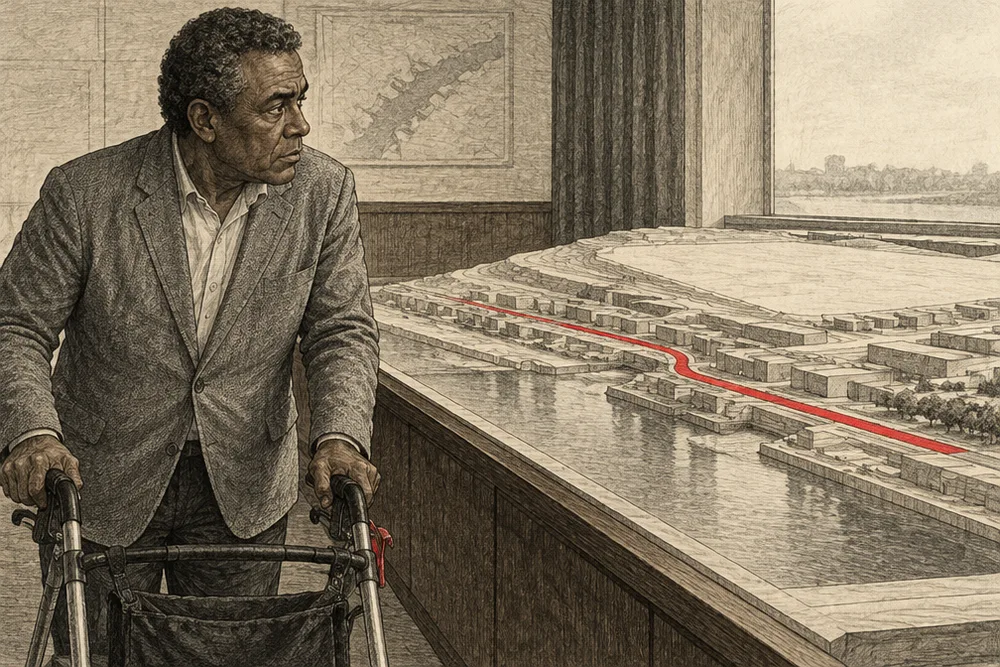
From the aisle seat, Hugh had heard the first motion pass over the scrape of chairs and the low electrical hum of the flood model. This was the same afternoon, and the second sheet was now in the deputy’s hand. On its raised terrain, the North Apron showed in pale relief, a blank stretch behind the lower terraces. A strip of scarlet marked the revised service route. The engineer’s plan left the Apron unbuilt for now; the council could still return to it later, unless the board decided what the old agreement meant before anyone signed a lease.
Hugh’s hands were curled around the rollator grips. The scarlet brake clips pressed his palms, and he loosened his fingers one at a time. From the sloped public bench, he could see Della’s shoulder raised beneath her striped shirt. She had stayed upright through the arguments, receipts stacked in her lap, her scarlet laundry pencil tucked behind one ear. Una sat near the aisle with her square document case between her shoes. Her knees were locked.
The deputy chair gathered the motion papers. “The defense works can proceed on the revised alignment. Claimant protection is a separate question. We have not got an adequately costed proposal for that today.”
“Then don’t dispose of the land today,” Hugh said.
Several heads turned. He had not meant to speak so loudly, but the chamber’s hard walls threw his voice back at him. The deputy looked down toward him. Hugh leaned forward, as he did when a harbor operator needed to hear a call over wind. “The engineer’s accepted plan doesn’t need the Apron sold or leased now. You’ve just approved it without that.”
The deputy lifted a hand, not quite to silence him. “That may be so. But postponing a decision has a cost.”
“So does pretending there isn’t one,” Hugh said. He felt Una’s attention settle on him, but did not look around. He knew what she was doing: measuring whether this was something he had asked her to handle, or something he meant to carry himself. “You’ve got a grant schedule and a construction schedule. Neither says the council has to lease the plots before the people with claims have had a chance to answer.”
Ivo Pellenden stood at the officials’ table, bent forward at the waist, his narrow ash suit creased at the shoulders. He spoke with the practiced patience of someone whose figures had already been challenged all morning. “The proposed lease revenue is part of the funding assumptions. A funded claims process is not free. If we set aside the site indefinitely, we risk losing the option and the grant.”