The Bell Beneath the Minutes
Page 166 of 242
Chapters
The claimant plots were named in a condition: no disposal or lease of the Apron before eligible households had received offers under the replacement-site undertaking. The wording did not guarantee every family would return or every workshop would be rebuilt. It did something more useful. It prevented the council from treating the land as available before it had answered the claims.
Una read the condition twice. She had spent days learning what documents could and could not do. An annex could point toward a promise; receipts could show what had actually been paid; a complete interview could prove Martin knew the difference between a moving allowance and a settlement. None of those things, alone, could hold a board to a particular course. That was why Della had demanded a funded claims window and a recorded bar on leases. That was why the resolution mattered.
The conveyancer clipped the new schedule to the marked deed plan. “This makes the easement conditional on the council adopting the alignment.”
“And the bay?”
“Protected in the schedule. The resolution needs to preserve it as well.”
“So if they pass the defense motion but remove the condition—”
“The grant may not proceed on this plan. Your sale amendment also becomes uncertain.”
“And if they adopt both?”
“We can complete as soon as the title withdrawals arrive and the deed is executed.”
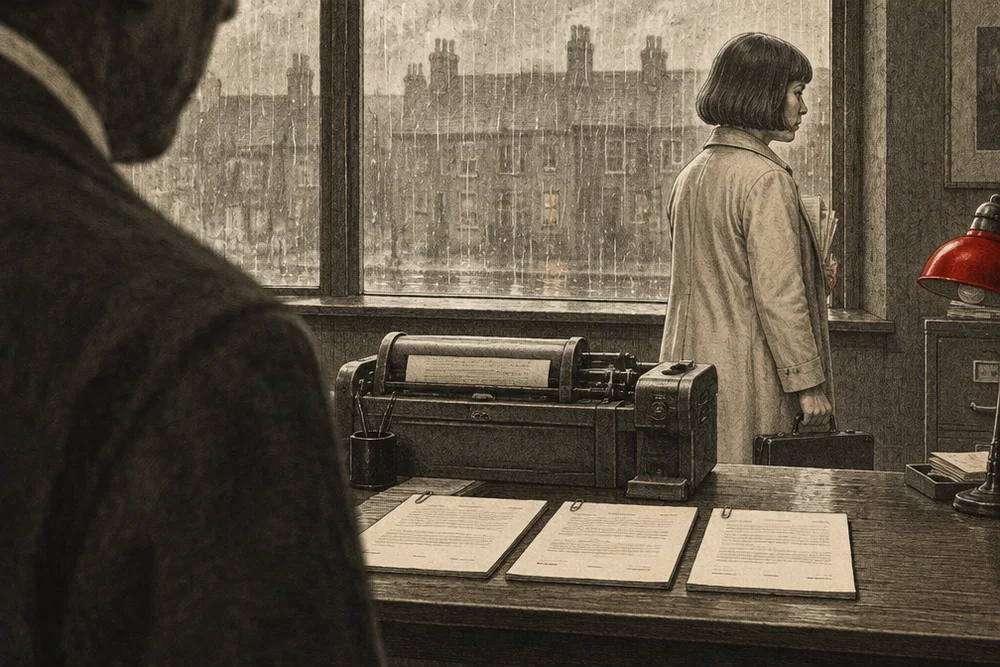
A printed page slid out crooked. The conveyancer straightened it by hand. “This is a complicated chain for a small property sale.”
“It isn’t a small property to the people who need it.”
She collected the copies in order: schedule, easement, buyer’s conditional amendment. The sequence gave her a small, unpleasant comfort. One page depended on another. The grant office had accepted the revised footprint conditionally. The buyer had accepted the changed price conditionally. The board had yet to accept any obligation at all.
Outside, Oarwick’s evening rain blurred the rows of houses on the upper terrace. Una carried the documents under her coat and kept her case level. She would not arrive at the hearing with pages curled from the weather and let anyone say the terms had been unclear.
The next morning, Una met Sayer by the model room at the council offices. The flood model lay beneath a glass cover, its terraces picked out in gray relief. Bell Street ran above the drowned section; the North Apron sat beyond the proposed barrier, a blank pale rectangle where the grant diagram had once placed contractor units. The new service track turned away from it and threaded behind Martin’s house.