No Crossing at Five Forty-Three
Page 261 of 273
Chapters
“You can get a coffee in the shed,” Mara said. “It’ll be bad, but it’ll be hot.”
“I’ll stay here.”
Mara studied her, then nodded as if accepting a plain fact. She had lost the right to wave a boat through on a private judgment of her own, too. That had cost her. The new agreement required a second shore worker for early runs, a published roster, and a documented decision when conditions made an approach unsafe. Mara had once treated such limits as an insult to experience. Now she treated them as weight to be carried, though she still disliked the feel of it.
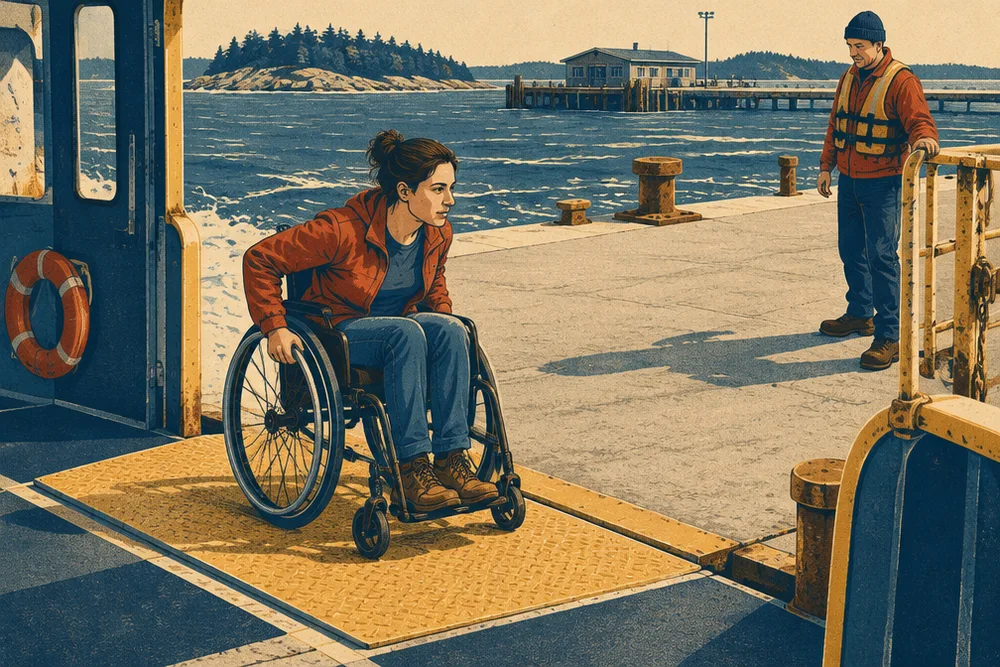
A gust swept across the landing. Spray stippled the glass doors of the shed. The relief boat’s bow shifted against its line, and the crew leaned into the task of holding the platform steady. Kit called a name; the woman in the wheelchair answered. The bridge plate settled with a metallic clack. She rolled forward without assistance, paused to speak to the worker, then continued aboard.
Tamsin’s fingers tightened around the strap of her bag. She had spent weeks watching that route develop from drawings and trial runs, from arguments over cost and the uncomfortable arithmetic of people who could not be carried in the same way as a crate. Seeing it work did not erase the times it had failed. It did not restore her job or change the look Kit gave her. It was only one crossing, made under conditions the people aboard could see and question.
Kit came down the gangway once the passengers were counted. His clipboard was tucked to his chest, protected from the spray. “We’re at capacity,” he said to Mara. “No extra bags.”
“Understood.” Mara looked to the second shore worker, who repeated the count. Only then did she release the line.
Tamsin stood back from the edge. There was no blank place for her to fill, no number she could add by memory. The boat drew away, making a narrow, dark seam in the water. People aboard settled into their seats. The wheelchair passenger had chosen a place near the rail, where the open air reached her.
The boat she watched leave reached the island nine minutes later. Tamsin could have asked for a later place on the same boat, but the public queue was full. She could have asked Gideon to find a way. He had once found one for her; she had returned the favor by pretending his crossing did not exist. The thought rose with its old confidence, then fell away. She waited for the next listed sailing.