No Crossing at Five Forty-Three
Chapter 14 · Milk on the Wrong Shore
Page 138 of 273
Chapters
The notice had been nailed to the terminal door at noon, where the old timetable used to hang. VEHICLES PROHIBITED ON RAMP, it said, in black capitals under Iona Carweth’s signature. Below that, in smaller type, was the sentence that mattered to the island: passenger service subject to review. No lorries, no vans, no milk truck. The ferry could carry people if the operator found a safe way to get them aboard. The cracked ramp could carry nothing heavier than the truth, and it had been carrying too much for years.
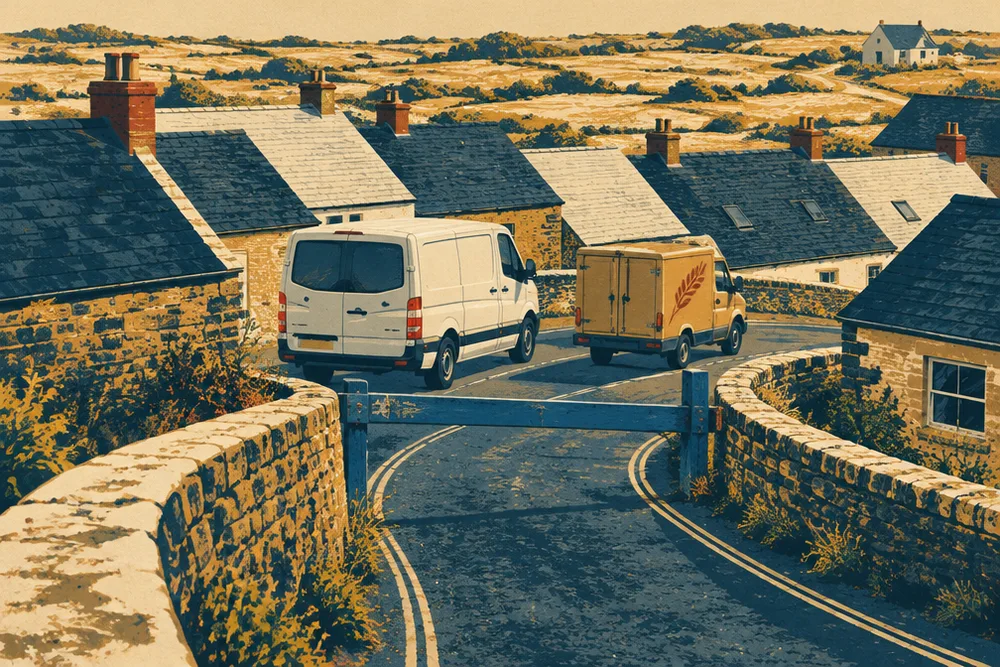
Gideon read the island notice, then took his listed place on the harbor master’s launch to help check the supplies stranded on the mainland. A copy of the notice had already been posted over there. On the mainland slip he read it again, his hands tucked under his elbows. Behind him, the queue of delivery vehicles ended at the bend: a white milk van, a bakery truck, two islanders’ cars with shopping in their boots. Their engines had been switched off to save fuel. The drivers waited beside them, looking toward the ferry as though the ramp might take pity and mend itself.
It did not. Mara Penrusk had tied the relief boat at the outer float, where a low rail and three steep steps made passengers possible, though not easy. The boat had room for people, not their cars. It carried no reliable freight arrangement and no wheelchair lift. The island’s groceries, medicine, and parcels were on the wrong shore, and the wrong shore was only nine minutes away. Distance had never been the same thing as access.
Gideon had once believed the ferry belonged to whoever needed it most. He had taught Tamsin that the list was a tool, not a law, and that an empty seat was a waste if someone could use it. Six nights ago, he had asked her to make an exception for his granddaughter. The ramp had flexed beneath the car. Kit Venn had written it down. Now the ferry was stopped, and Gideon could not pretend his favor had been weightless.
The milk van’s driver, Len Parry, unlatched the rear doors and stared at the crates stacked to the roof. “If I leave it here, the cream goes,” he said. “If I try to take it down those steps, it goes faster.” He nodded toward the relief boat. The crates had been packed for a level loading bay, not a bobbing float and a narrow gangway.