No Crossing at Five Forty-Three
Page 249 of 273
Chapters
He rinsed his plate and laid out tomorrow’s clothes. The ticket went into the breast pocket of his coat. He checked that it was there, then left it there. For years he had believed that belonging to the island meant being able to call on its people without counting the cost. Perhaps belonging meant accepting the count, even when his own name appeared on the list. At the slip, the tide would turn again before dawn. The ferry would come when it was supposed to, and if the conditions were right, it would take him.
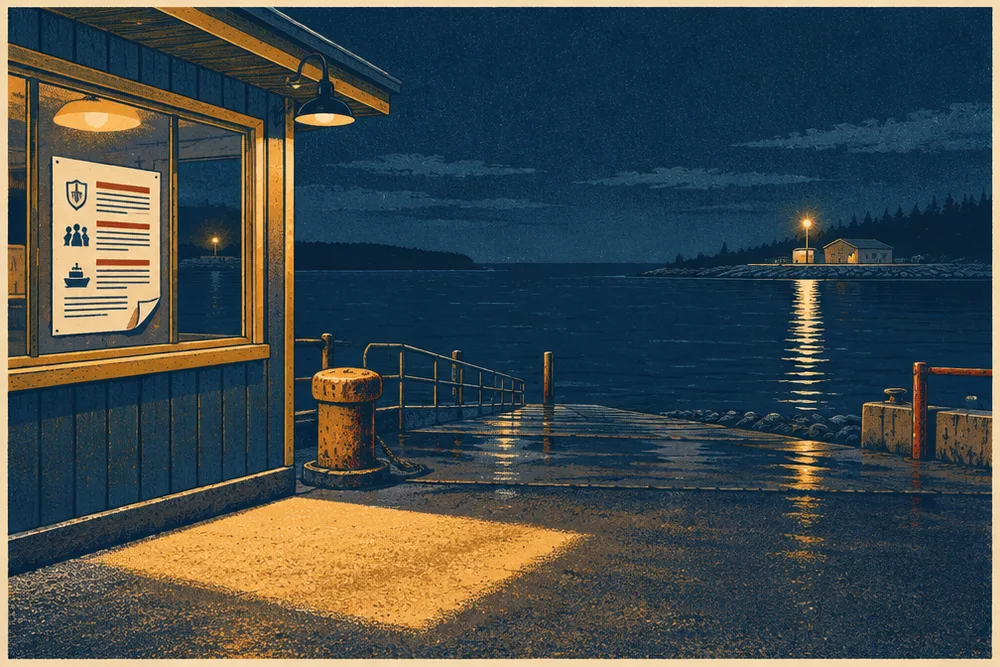
Before bed, he walked back to the terminal once more. The terminal lights made a pale square across the forecourt. Beyond it, the new ramp descended to the water, its surface clean and unmarked except for the dark shine of damp. He could not see the sealed cellar beneath the service passage. He knew it was there, recorded and closed, no longer a secret route for anyone who possessed the right key. The earth kept what people buried in it; the island kept the consequences.
A gust moved the notices in the terminal window. One corner lifted against the glass, then settled. The operating agreement remained legible: named shore coverage, a passenger count before departure, and a stop authority independent of the person who wanted the boat to sail. Gideon read it from the forecourt. The words did not promise that people would always behave well. They made it harder to pretend that no one had the power to stop them.
He looked toward the mainland. A single white light stood near the inspection shed, steady over the dark channel. On the far side, someone was also awake, tending a shift that would make the crossing possible in the morning. Gideon could not know that person’s name from here. He did not need to. It was enough that the new service counted them too, along with the passengers and the skipper, before the bell called anyone to the water.
Then he walked home and shut the door behind him. His ticket waited in his coat, his name on the public list, his seat no more secure than the terms that made the journey safe. He would be at the queue fifteen minutes early. If the shore workers were ready, he would board. If they were not, he would wait. The thought did not comfort him, exactly. It steadied him. For once, the favor he had not asked for was the one that mattered: no one would have to pretend he was owed a crossing.