Sums Behind the Wash, Desks Under the Hammer
Page 91 of 250
Chapters
Elsie took a short length of cord from her kit. “Show me.”
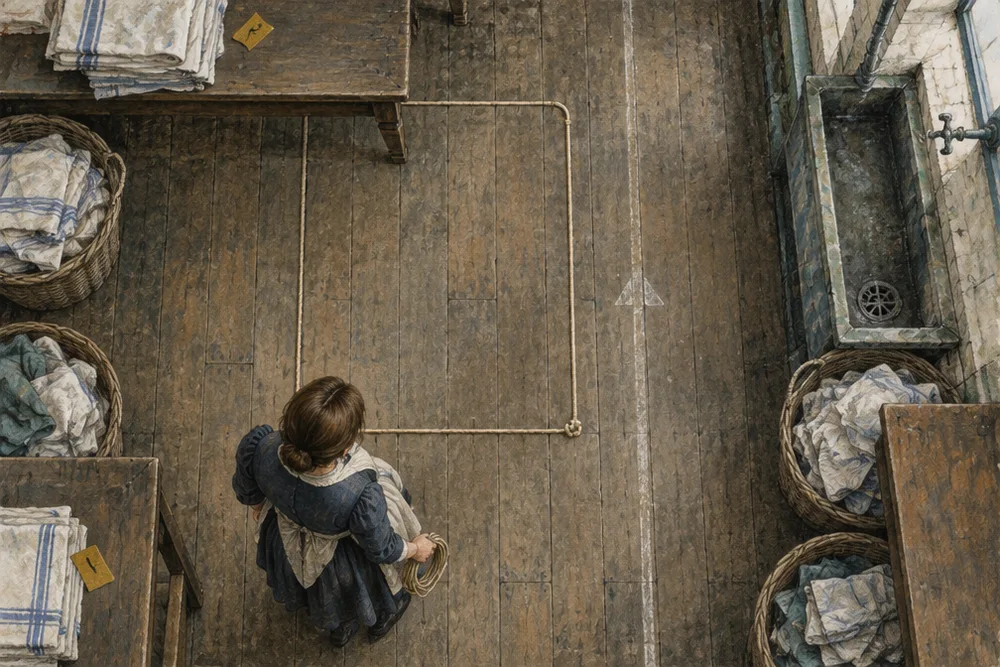
Mina handed her brother to a woman passing through the room, who took him only after Mina asked and received a clear yes. Then she walked the length of the sorting area, counting paces with the quick precision she used on sums. She marked a rectangle with the cord, accounting for the table, the doorway, and the way a person carrying linen had to turn. She did not count the wet sheet as permanent furniture, but she did count the baskets that came and went.
“Desks have to face the teacher,” she said. “And there’s no point putting one where the children can’t get out when the wash comes through.”
“How many can you fit?”
“Not enough if you put them like the ones in the old school.”
Elsie pictured the paired seats she had seen listed for the auction. “Could you use them another way?”
“If they’re narrow. If the door stays clear. If nobody thinks a child can sit where the laundry has to be carried.” Mina took the cord and adjusted its line. “There. That’s the most I’d say without seeing them.”
The answer was practical and exact. Elsie entered Mina’s rough measurements in the book, beside the repair work and the hours of care. The book was no longer just a record of what people had asked her to do. It was becoming a record of what a room could not do at once.
“I’ll find out what the desks measure,” Elsie said.
“If you buy them.”
“If I can.”
Mina looked toward the register. “If you buy them, they’ll still need somewhere to go.”
“Yes.”
“Not in the middle of the laundry.”
“No.”
Mina nodded, satisfied that at least Elsie had not answered with an easy promise. Then she took back her brother and turned toward the front room, where her mother’s shift would end when it ended. The small boot swung from her hand. Elsie left the patch uncut until she knew what leather she could afford to use.
Outside, the lane climbed between the replacement cottages. At the dry end of Spindle Row, families with reservoir wages had chosen first; farther along, tenants shared yards and coppers. Children passed Elsie in twos, some carrying slates, some carrying bundles meant for home. She asked each household when its child could come, and wrote the answers down without turning them into assurances. One mother said mornings, if she could hand her youngest to a neighbor. Another said no fixed hour; the work came when it came.