Sums Behind the Wash, Desks Under the Hammer
Page 88 of 250
Chapters
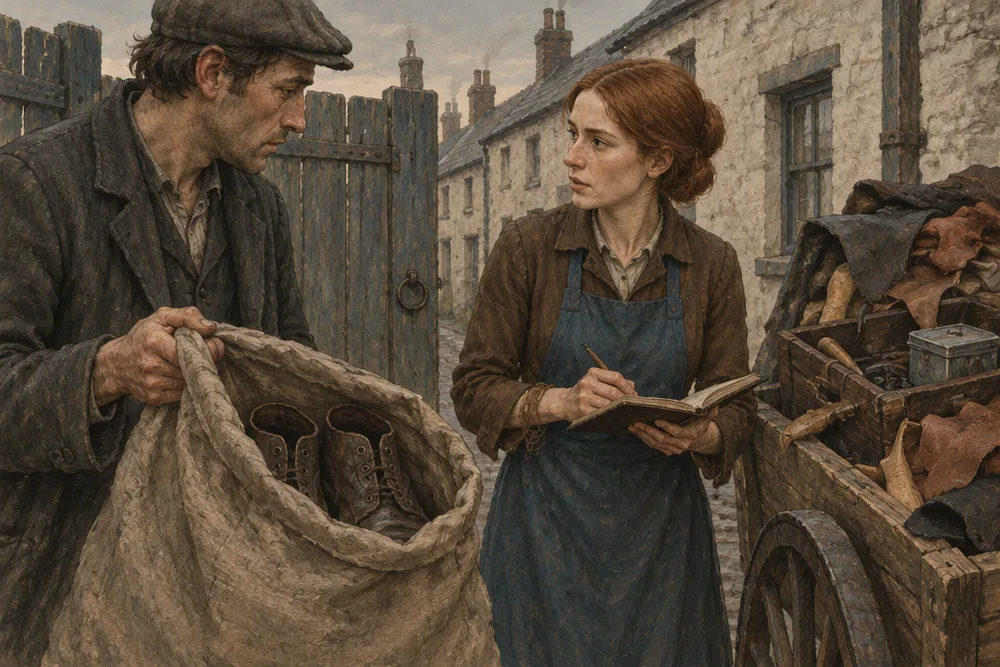
A man came through the lane gate with a pair of shoes in a sack. He had the broad, tired look of someone whose shift would start before the sun had cleared the cottages. Elsie stood, accepted the shoes, and asked when he needed them. He said Saturday. She wrote down his name and the time he could collect them, then checked the cart’s cramped burden of tools and leather scraps.
“You’re keeping two kinds of accounts now,” Mina said.
“Three, if I count what I owe for the cart wheel.”
“That’s not an account. That’s a threat.”
Elsie laughed, and Mina’s mouth almost moved with hers. The little moment passed when the boy shifted and began to whimper. Mina put her cheek against his hair and started walking him toward the washhouse. Elsie called after her that she would come by with the price of a patch. Mina did not turn, but lifted the hand with the boot in it, a small acknowledgment.
The man waited while Elsie marked his repair. “Those children still at the washhouse?”
“Some are. They’ve been having lessons there.”
“My two would come in the morning, if there’s room. I’m on the reservoir wage, and the wife can bring them before she takes her shift.” He took a coin from his pocket and rolled it in his palm. “Could put something toward it. A subscription, like.”
Elsie closed the book. “What would you be paying for?”
“The school. A morning place for the two of mine.”
“Then it isn’t a general subscription.”
“I’m not asking for anything free.” He looked surprised by her answer, and then a little put out. “I’m offering money.”
She knew he was. The offer had a use; money could buy chalk, coal, a latch, a proper board to write on. But if a family’s contribution bought a reserved place, the places would belong first to those who could pay. Mina’s absence would become a price someone else had already paid to overlook.
“If we take money for the school,” Elsie said, “we need to know what it buys. If it buys a place for your two before the others, then it buys more than chalk.”
“They can attend mornings. That’s the use they’d make.”
“And what about a child who can’t attend mornings?”
The man frowned. “She can come afternoons.”
“If there are lessons in the afternoons.”
“Then make lessons in the afternoons.”