Sums Behind the Wash, Desks Under the Hammer
Page 4 of 250
Chapters
She went down the lane in both boots, the slipper tucked into her coat pocket with the wet toe sticking out. Elsie watched as far as the dip where the water ran across the stones. The woman took that part without shortening her step.
Elsie pulled the iron foot out of its socket. The tin came with it, clinging for a moment before it fell on the bench. She put the iron beside the tool tray and left the tin where it was. There was grit on the floor where the wet slipper had stood. Elsie swept it out with the side of her boot, then brought the cart close enough to load without having to step down into the lane.
She began with the lasts. They were hers: beechwood shapes worn smooth where her father’s hands had held them, each with a size scratched into the heel. The inventory man had called them portable, as if portability meant ease. Elsie unscrewed them from their pegs and wrapped them in an old apron. She lifted the tool tray next, counting awls, knives, pincers, a small hammer, and the waxed thread she kept looped around her wrist.
The bench stayed. She could not lift it alone, and lifting it before the inventory would turn a claim into a quarrel she could not afford. She kept working around it, making a pile of what was hers on the cart. Her fingers moved fast; her mind stayed on the bolts. Two could be unscrewed in less time than it took to boil a kettle. She could take the bench to pieces, perhaps, but the fixed top was the thing worth saving.
Dallow returned with a chalk box and a younger man carrying a list. He had taken off his gloves to write. “Portable tools?” he asked.
“Mine.”
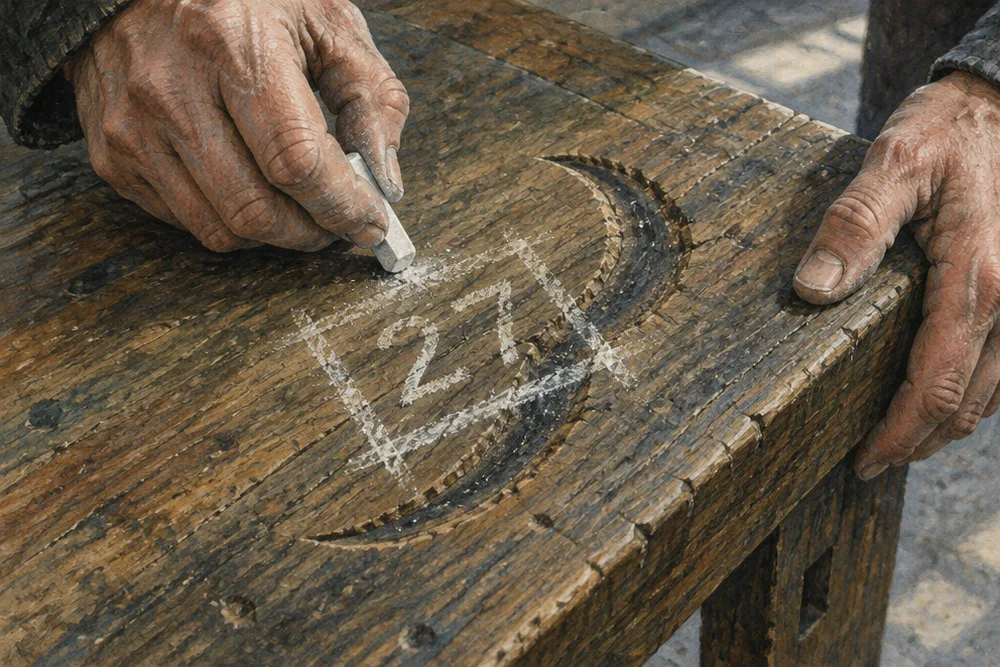
“I’m not disputing that.” He looked at the bench and ran chalk along its edge, leaving a pale stripe on the elm. The square of inventory mark crossed the crescent scar.
Elsie put down the bundle of lasts. “You’re marking it as county salvage?”
“As property with the premises. The owner can bid at clearance.”
“I am the owner of the work I do on it.”
“You’re the owner of your tools.”
“I make shoes here.”
“I know what you make.” Dallow did not sound unkind. He sounded late for another building. He wrote the bench’s dimensions and marked the bolts with chalk. “If it’s offered, you may bid.”
The younger man had begun chalking the wall fittings. Elsie watched him draw a number beside the bench. Her father’s crescent had been there longer than either man had been working for the county. Now it was just a mark to be itemized.