Sums Behind the Wash, Desks Under the Hammer
Page 187 of 250
Chapters
They carried the desks back from the front of the bay, leaving them stacked along the wall where they would not obstruct either door. They did not take the single apart. Its brace was sound, and removing it would risk splitting the top. Elsie wrote its new measurements on the back of her scrap paper, along with the clear width of the aisle and the position of the first row. These were facts they could use again, whether the board granted the shed or not.
Mina helped carry the slate boards to the door. “If we have to move everything again, we’ll lose another day.”
“Then we won’t move it unless we’re asked.”
“And if they say no?”
“We’ll take the furniture out.”
“That’s not what I asked.” Mina stopped just inside the doorway. The horn button on her rust cardigan caught the light. “What if they say no to the shed?”
Elsie could have answered with another possibility, another route to examine. But Mina was not asking her to invent a plan. She was asking whether the work had meaning if the permission never came. Elsie looked back at the single desk, its cut edge rough but sanded smooth enough not to catch a sleeve.
“Then this proves what a small room needs,” she said. “And what it can’t do without. We don’t lose that by leaving.”
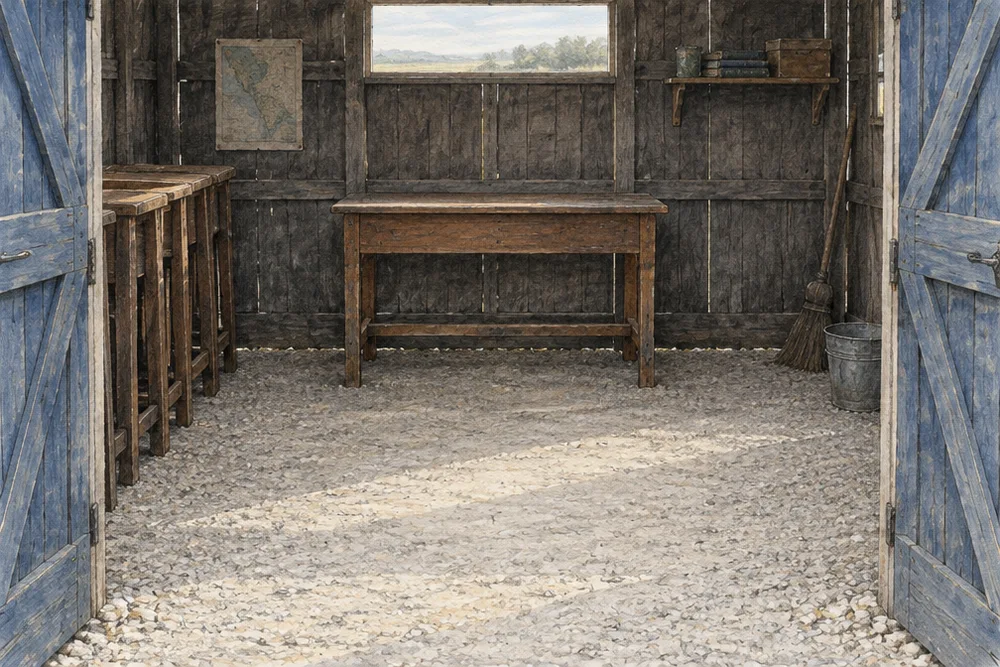
Mina considered it, then carried the slates out. “I still want the room.”
“So do I.”
Agnes locked the tools into a box borrowed from one of the volunteers. She did not leave her chalk behind; she gathered every piece from the floor and put it in her pocket. The volunteers had given their afternoon, but none of them had promised another day without knowing whether the shed could be used. Elsie could not ask them to keep building on hope alone. She had learned what happened when a person’s labor was treated as a free material: sooner or later, it was the person who broke.
At the front, she looked once more at the two doors and the marked line. “We’ll need water and privy access contracted before possession,” she said, making the condition plain to herself as much as to the others. “And a named keeper for the yard.”
“Who can guarantee upkeep?” Agnes asked.
“Not us by ourselves,” Elsie said. “We have to put the bill where the decision is made.”
The others were quiet. The shed had shown them a workable classroom and the cost of making it real. They stepped onto the lane together, leaving the repaired desk in the place it might one day serve.