Sums Behind the Wash, Desks Under the Hammer
Page 141 of 250
Chapters
“There,” she said.
Nell went to the mantel and looked back. “Put a chair beside it. Whoever sits up with a baby will need somewhere to put her elbows.”
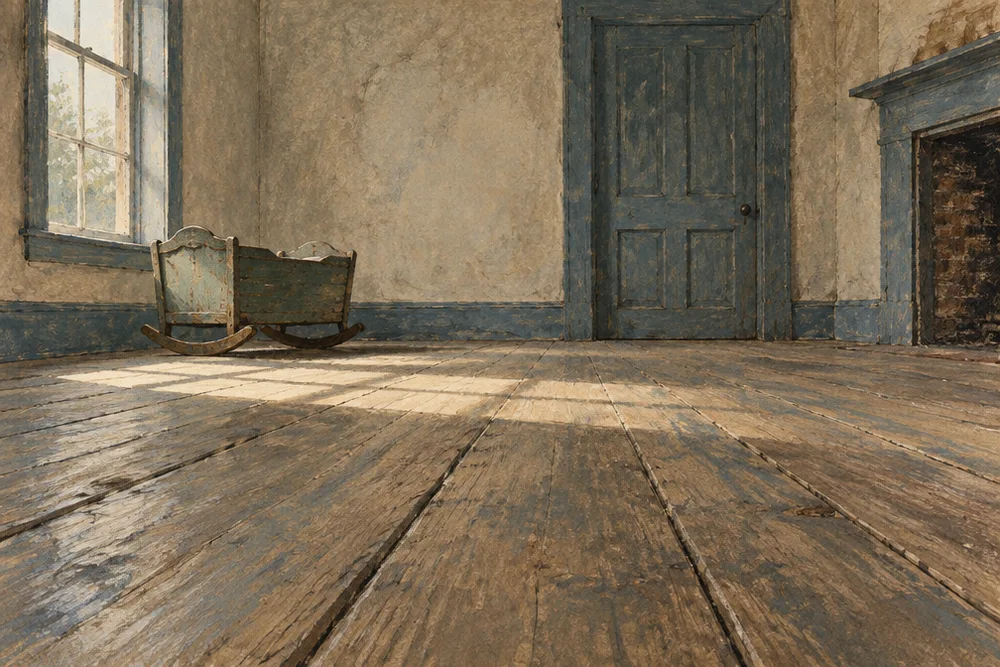
Elsie brought the low chair from beside the door. She sat in it and found that she could reach the cradle without bending but could see nothing of the passage. To look out she had to lean forward until both heels left the floor.
“I could sit here and hear the door,” she said.
“You could hear the boiler,” Nell said. “You might hear the door if someone shut it hard.”
Mina came round the chair and took hold of its back. Together they moved it to the other side of the cradle. Now Elsie could see a strip of passage the width of her hand. Anyone small enough to pass beneath the washhouse latch could leave that way without crossing the strip.
The woman in the shawl settled the baby against her shoulder. “Mine won’t walk off.”
“No,” said Nell. “But the person holding yours won’t be quick after one that can.”
Elsie got up. From standing height there scarcely seemed to be a blind place in the room. She sat down again and asked Mina to try the door.
Mina went out sideways, without moving the door at all. Then she came back carrying the empty basket Nell had taken off the table. She had to open the door wider for that. Its edge caught the chair, and Elsie put a foot down smartly to save herself.
“That’s without a thing in it,” Nell said.
The man from the reservoir road took the basket from Mina. He carried it high against his chest, as if it were full, and came through the passage at his usual pace. Elsie saw what he could not: the cradle foot projecting past the chair. She caught the rim of the basket before he brought it down.
“I’d have put it on the table,” he said.
“So would I,” said Nell. “And I’ve been coming through that door with baskets for six years.”
They moved the cradle to the end wall, where the limewash was flaked at the height of a boot heel. The chair went beside it. This time the man carried the basket through and back without turning his shoulders. He set it down in the passage and rubbed a red mark the wicker had left on his wrist.
“Wouldn’t children be better coming by the yard?” he asked. “Save them that turn.”