Seven Nights Above the Ferry
Chapter 10 · The Empty Bunk Schedule
Page 134 of 256
Chapters
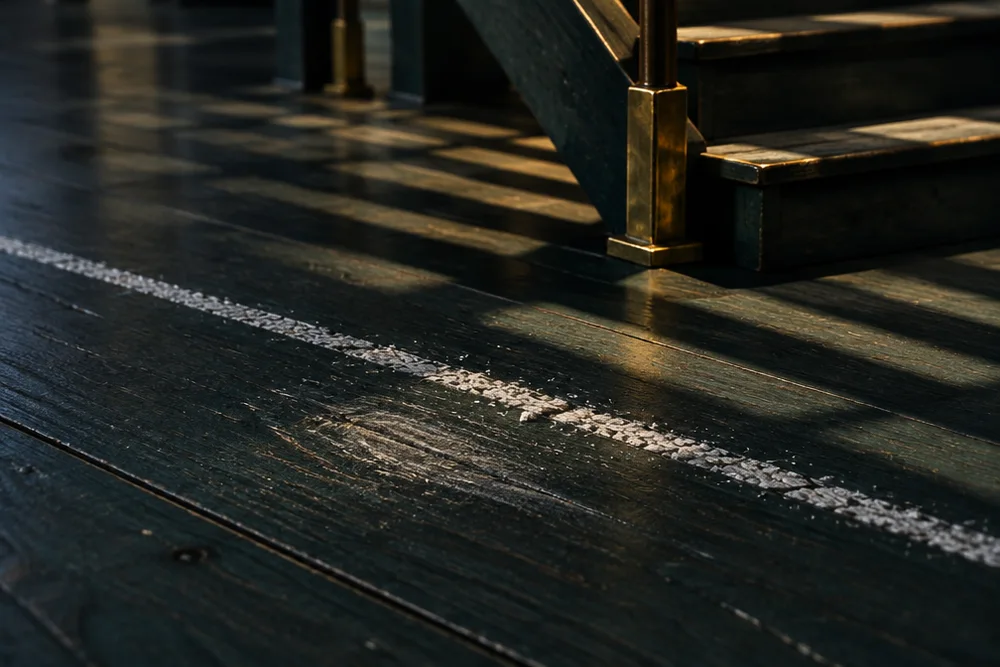
The chalk line across the landing had been drawn twice, once at each end of the two rooms the surveyor had closed. It was white and blunt, already scuffed where Kit had carried a folded blanket past it. Tamsin stood below the stair with the notice in one hand and the lodgers’ list in the other. Above her, the upper floor creaked in its usual scattered way: a heel crossing, a kettle set down, someone coughing behind a door. The building was not empty. It was not even quiet.
The surveyor had left a sheet pinned to the wall beside the chalk. Tamsin read it again, making herself attend to the exact language. Movement had been found beside the old brick infill. Two rooms were restricted pending further inspection. No finding had been made about the rest of the floor. She had copied the wording into the emergency application and underlined pending. The word was small, but it had a boundary around it.
Kit came down with his maroon cap crushed in one hand and a strip of paper in the other. Flour marked his trousers at the knee. “The bunkhouse has a wing we can use,” he said. “Or has a wing the roster says is empty. I’m going to check it before I put anyone’s name on a request.” He glanced at the notice. “If it’s empty only on paper, we need to know that too.” Tamsin folded her application carefully. A bed that existed only in a column would not help them.
The authority’s staff bunkhouse stood behind the ticket hall, reached by a service passage that smelled of wet coats and diesel. Kit had got the published standby roster from the crew noticeboard. It was a stapled sheet, corners softened by hands, with rotation dates and bunk numbers written in columns. He laid it on the table in the crew common room and placed a finger under the next changeover. “This is the night the relief crew comes back,” he said. “Until then, this wing is blank.”
“Blank on the roster,” said Tamsin. “Not necessarily empty.” She had learned not to let a form answer a question it had not been asked. The closing notice had called the upstairs rooms incidental; the desk forms had called their occupants guests. Words had made beds disappear before. She asked Kit what he had checked himself.