One Minute in a Kitchen Chair
Page 72 of 235
Chapters
The actual notice was folded in the pocket of her teal canvas jacket. She pulled it out and smoothed the creases against her thigh. The council’s former ticket hall was above the slip; its notice board had been covered in paper announcements and curling strips of tape. She had read the hearing rules there before they left that morning. They had made sense then, as rules did when you were standing in daylight.
“Public submissions,” she read aloud, tracing the printed line with one long finger. “Written statements, three minutes. Audio or video, one shared minute per submission. One shared minute.”
Ivo looked up. “Shared by who?”
“By everyone in ours, I suppose.”
“Ours?”
“The chair project. The recordings.” She looked down at the paper again, as if a second reading could change its meaning. “It says the recording must be submitted as one file, no more than sixty seconds.”
The ferry’s engine pulsed through the floor. A woman in the next row lowered her knitting and glanced at them, then returned to it.
“They told you that?” Ivo asked.
“It was on the notice.”
“And you didn’t see it?”
“I thought it meant a minute each.” Mara heard the excuse in her own voice. “I thought they’d let us play more than one.”
Ivo sat back. His heels remained together, but his shoulders had gone stiff beneath the butter-yellow jacket. “A minute for all those people.”
“Yes.”
“That’s not much of a hearing.”
“It’s what we have.”
The notice trembled faintly in her hand. She thought of all the times she had set up the chair, asked a person to sit, and given them room to find the right words. The ferry had turned those words into a larger thing than she could carry. Now the council had reduced them to a minute and called that a submission.
Ivo rubbed his thumb along the edge of his recorder. “You could read the rest aloud in the written statement.”
“I can’t make everyone’s words into my statement.”
“Then we pick what matters.”
Mara folded the notice again, carefully lining up the creases. The ferry rocked under them, but her hands stayed steady. “We have to ask them what matters to them.”
“And if they all say everything?”
“Then we ask them what they’re willing to lose.”
The sentence settled between them. Neither looked away first.
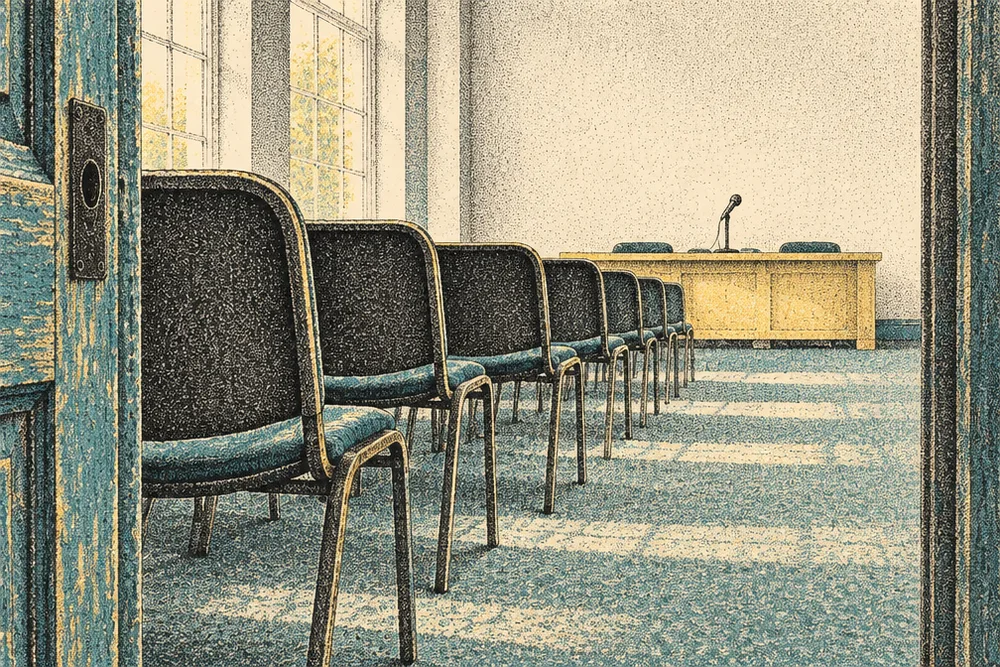
On the island, the wind shoved at the door of the former ticket hall. Mara had to shoulder it open. Inside, the room smelled of wet wool, old paper, and the floor cleaner the council used on meeting days. Rows of chairs faced a low table with a microphone that looked like a black flower on a stalk. No one else was there.