One Minute in a Kitchen Chair
Chapter 1 · Chair on the Manifest
Page 1 of 235
Chapters
The kitchen chair had four different feet. One was a square of cork, one a folded tea towel, and two were bare wood polished smooth by years of being dragged across the linoleum. Mara Veskellan had borrowed it from Ivo and Neri’s mother and wrapped its legs in strips of old sailcloth anyway. The chair was not going to slide on the ferry, and she was not going to spend the crossing explaining why she had brought it.
She leaned from her ankles, long forearms working the rope around the cabin rail. The ferry shuddered beneath her, its engine turning over in a low, familiar grind. Beyond the open freight deck, the island’s harbor road climbed steeply between wet stone walls. A gull stood on the slip bollard, hunched against the morning wind as if it had been told to wait for a vote.
“You know there are seats,” said the deckhand at the cabin door.
“This one’s for people who don’t usually get asked.” Mara pulled the knot tight. The chair gave a small wooden creak. “They can sit for a minute. I’ll record what they want the council to hear.”
He looked from the chair to her teal canvas jacket, then to the phone in her hand. “And if they want to hear the ferry should go?”
“Then I record that.”
She had said it often enough to make it sound easy. The council’s vote was three Fridays away. If it cut the winter route, Mara would lose the forty-minute crossing that took her to Ada Rusk’s fabrication shop on the mainland. Ada had offered an apprenticeship, not a promise that she could work around impossible transport. Mara had spent months learning to hold a torch steady, to set a clean seam, to understand that a small error could run the length of a joint.
At seventeen, she was still expected to call this a chance. She called it work. She wanted it badly enough that the word winter had begun to feel like a threat.
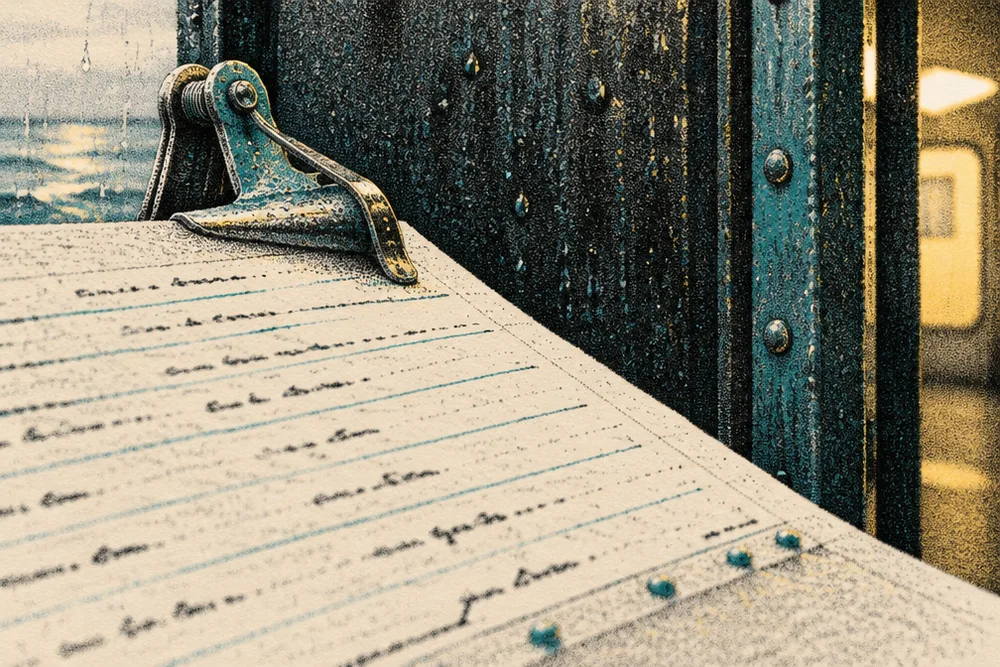
The ferry’s passenger list was clipped beside the door. Mara had written her project name at the bottom: ONE MINUTE IN A KITCHEN CHAIR. Under it, in block capitals, she had added: SPEAKER CHOOSES WHAT IS USED.
A gust slapped rain against the glass. She checked the chair’s lashings once more, then stepped back. The seat faced the cabin, not the window. Whoever sat there would look straight at her.
Passengers came aboard in little bursts from the slip: a woman with a paper sack tucked under her arm, two boys carrying a netted football, a man in a brown cap who smelled faintly of diesel. Mara watched them settle among the fixed seats. She kept her phone screen dark and let the chair stand empty.