Night Train for a Vanishing Town
Page 46 of 188
Chapters
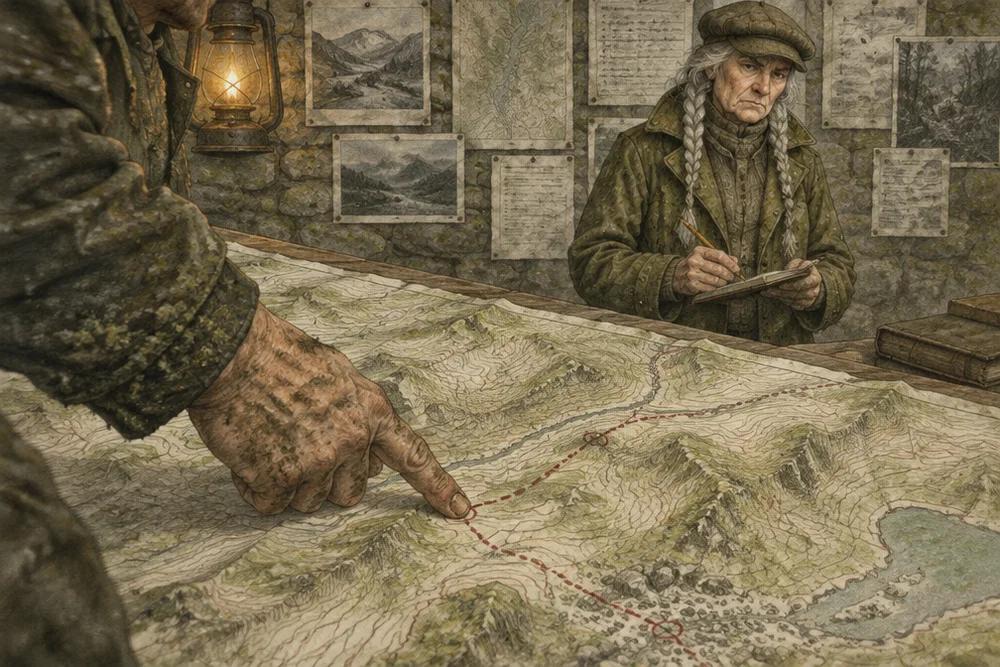
The first report arrived by runner, a girl from the upper terrace with wet hair plastered to her cheeks. She had watched from the old weigh shed, where a narrow view opened across the track. The rail was visible to the first bend. Water lay over the ballast beyond, but she could not tell its depth. No timber or rail appeared displaced in the stretch she saw.
“That’s useful,” Mara said. “It isn’t permission.” She asked the girl to mark the point on the map, then sent another resident to the higher path to check the next visible section from a different angle.
Nessa kept the key in her pocket. Each time the radio spoke, she listened for a certainty nobody had earned. Instead, the reports came in pieces: a culvert mouth beneath the ferns; a length of rail shining under water; a loose branch caught against the outer fence. Mara drew lines and circles on the map, asking how far, how high, what landmark, what angle. When someone said the track looked clear, she asked which part they had actually seen.
At the train, the relay plan had begun. Nessa could hear Inez describing it over the radio: passengers would take positions where they could observe from the coaches or safe ground, passing reports in hundred-yard stretches. Nobody would be required to walk flooded ground. The driver would advance only to a confirmed point, then stop. The plan sounded improvised, which it was. It also sounded more honest than the railway’s first question—whether the driver could certify the spur.
“She’s making the passengers work,” Toll said, not quite accusing.
“She’s asking them to observe,” Mara replied. “They can refuse.”
A man in a soaked cap near the window shook his head. “They’re supposed to be passengers.”
“Tonight they’re people who can see,” Nessa said. “That’s all.”