Night Train for a Vanishing Town
Page 22 of 188
Chapters
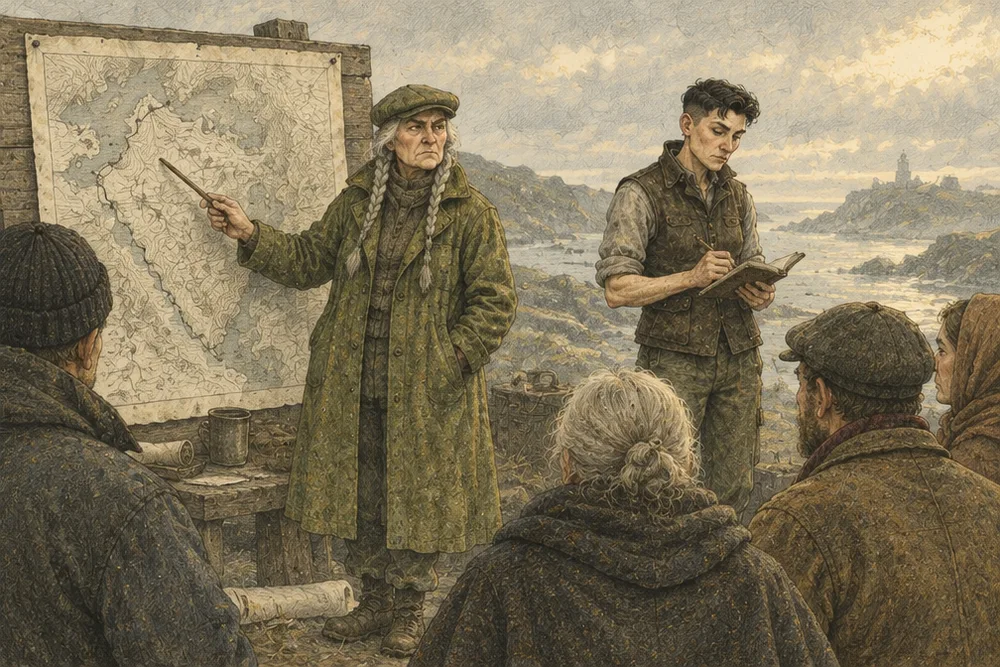
She returned to the lamp house. Mara stood beside the map, one square finger on the route climbing toward Slate Crown. “The arch is higher than the main bridge,” she said. “The saddle behind it is lower. Water can leave you with no easy way back.”
“And the disused spur?”
“It’s disused because the railway stopped maintaining it. Not because it disappeared.”
The handset crackled again. Toll asked whether Hushbank would open the gate. Nessa looked at the official list on the crate. The printed total remained incomplete, the pencilled names in the margin unverified. An evacuation declared finished too early could turn a person into a blank line. A train admitted too soon could make the whole town pay for somebody’s guess.
“Not yet,” she said. “I’m not releasing the gate until I know who is coming and until we agree on how the train will move.”
Toll began to answer. Nessa raised her voice enough to carry through the static. “The station road is gone, the lower streets aren’t counted, and you’re asking us to let an unconfirmed train onto a route no one has inspected tonight. I will not tell the town to trust a permit.”
Mara kept her eyes on the map. “Good,” she said quietly, not approval so much as recognition.
At 23:24, the radio battery faded to a whisper. Jory replaced it with the spare from the emergency tin, and Nessa waited through the long, crackling interval while the connection returned. She used the delay to ask each person in the room whether anyone had heard from the lower terraces.
An elderly woman said her nephew had gone to the mine before the shift bell. Edda repeated that she had seen a light near Furnace Row. A man named Pell said the Washhouse Cut was already knee-deep when he climbed it. Nessa marked each report with its time and source. The pencil point snapped. She sharpened it with her pocket knife and kept going.
Mara found a place beside the table, though she did not sit. The raincoat made her look broader than she was, and her flat cap had left a dark line across her forehead. She listened to the reports without interrupting, asking only when a path had last been seen or whether the witness could distinguish a lit window from a moving lamp.
“You know these streets,” Nessa said.
“I know the line.”
“That wasn’t what I asked.”