Night Train for a Vanishing Town
Page 176 of 188
Chapters
Across the annex, Inez had spoken to Toll at last. He gave her a paper, and she read it without expression. Then she folded it and tucked it into her jacket. Nessa could not hear what they said, and did not ask. The inquiry was not finished, nor was anyone’s life settled by the vote.
Outside, late light rested on the temporary roofs of the county shelters. The river could not be seen from the annex, but its sound carried in the wet air, low and steady. The old station would not open again. The lower streets were still there beneath the flood’s debris, though the maps had begun to show them as a place people had lived rather than a place they could return to.
Nessa walked to the edge of the parking area with Mara. Across the road, the county had set a board displaying the proposed ridge platform. The drawing showed a short shelter, a ramp, and a timetable case. There was no signal tower, no grand entrance. Nessa liked it better that way. A stop was a promise only if the train actually stopped.
“They kept the name,” Mara said.
“They kept the people.”
“That’s harder.”
“Yes.”
For a moment they stood without speaking. The inquiry’s findings would take weeks. The railway still had to answer for the spur, for the inspection entry, and for the condition of the main bridge approach. The town still had to negotiate housing and water and work. The vote did not make those questions easier. It gave them a direction.
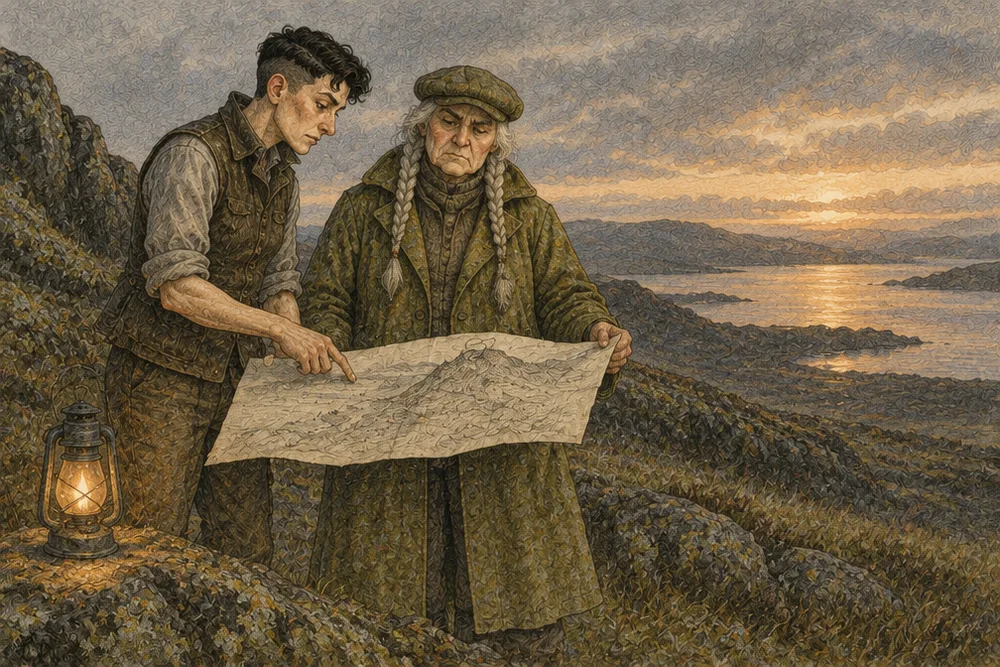
Nessa looked toward the annex windows. Inside, volunteers were clearing cups and stacking chairs. Kit and his father were among them. His father’s sling made the work awkward, so Kit carried the chairs alone and set them down too hard. His father laughed at him; Kit rolled his eyes and tried again more carefully.
The old town had been omitted from the mine’s map, then omitted from the evacuation list, then nearly omitted from the final train. Nessa had once thought that keeping a town alive meant protecting its houses. Now she understood that it could also mean carrying names, obligations, and ways of noticing into a place that had not yet learned them.
“We’ll need another roll,” she said.
“For the new houses?”
“For everyone who comes. And for anyone the maps forget.”
Mara turned her cap in her hands. “Keep a copy where the railway can’t lose it.”
“I will.”