Night Train for a Vanishing Town
Page 173 of 188
Chapters
Pell asked if Nessa had a response to the employment ruling. Nessa said the railway was free to decide who drove its trains. It was not free to label a rescue successful because a forged document happened to lead to a capable person. “We were not proof that the paperwork didn’t matter,” she said. “We were proof that people had to keep asking what the paperwork left out.”
Pell thanked her. The hearing adjourned. The inquiry would publish findings after reviewing the maintenance records and the company’s hiring practices. Nessa gathered her notebook and followed Mara out, past the still-stopped clock and into the corridor, where the vote had already begun.
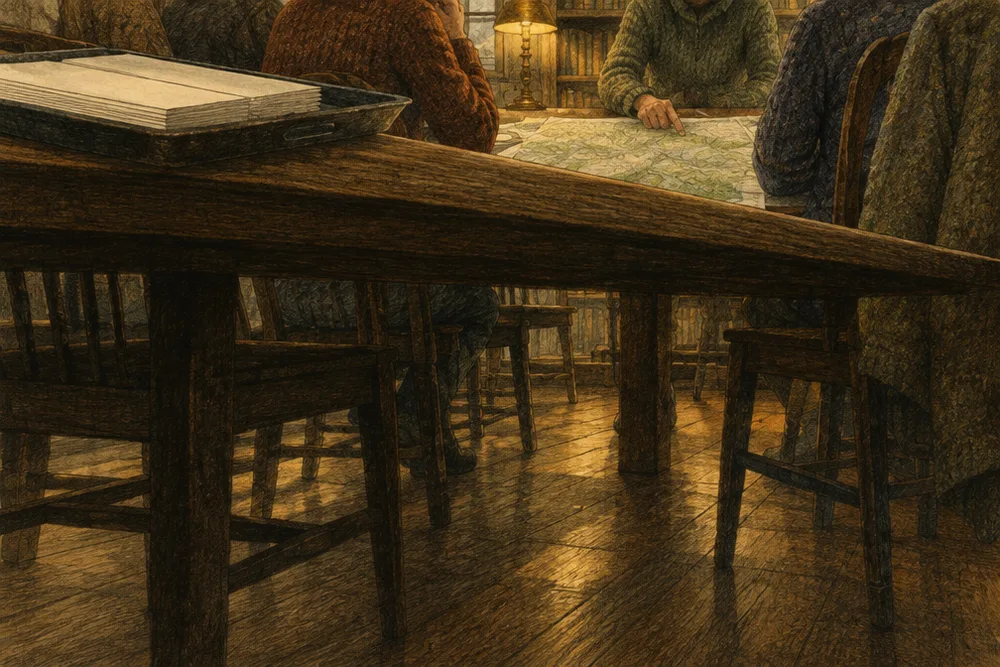
The library annex had once been a reading room. Folding tables now divided it into registration, ballot, and assistance stations. Rain jackets hung from a line strung between two shelves. On a map pinned to the wall, the old station and low terraces were marked with a broad blue wash. The ridge, where the new stop was proposed, remained bare paper.
Nessa found Kit at the registration table. He was helping an older neighbor find her name on the resident roll. His father stood near the window with a walking stick and one arm in a sling, listening to a clerk explain the ballot. He had made it through the evacuation with an injured shoulder and a stubborn refusal to sit down for long.
“They’re voting already?” Nessa asked.
“They started while you were in the gym,” Kit said. “People were worried the inquiry would use the whole day.”
At the next table, volunteers were checking the list against the names from the flood count. Seven households had been absent from the mine’s official map. Now each had a line on the resident roll, written in a hand that could be corrected if someone said it was wrong. Nessa had insisted that a person’s name be entered before anyone asked whether the house could be rebuilt.
The vote was plain: rebuild the lower settlement where it stood, or move the community to the ridge. There was a third box for abstention. No one had been promised that the railway would pay for every house or that the ridge stop would restore the old work. The county would fund a replacement platform if the town chose the move; the railway had agreed to provide a service there, subject to the ordinary review.