Ferry Receipts for Warnings Never Sent
Page 90 of 248
Chapters
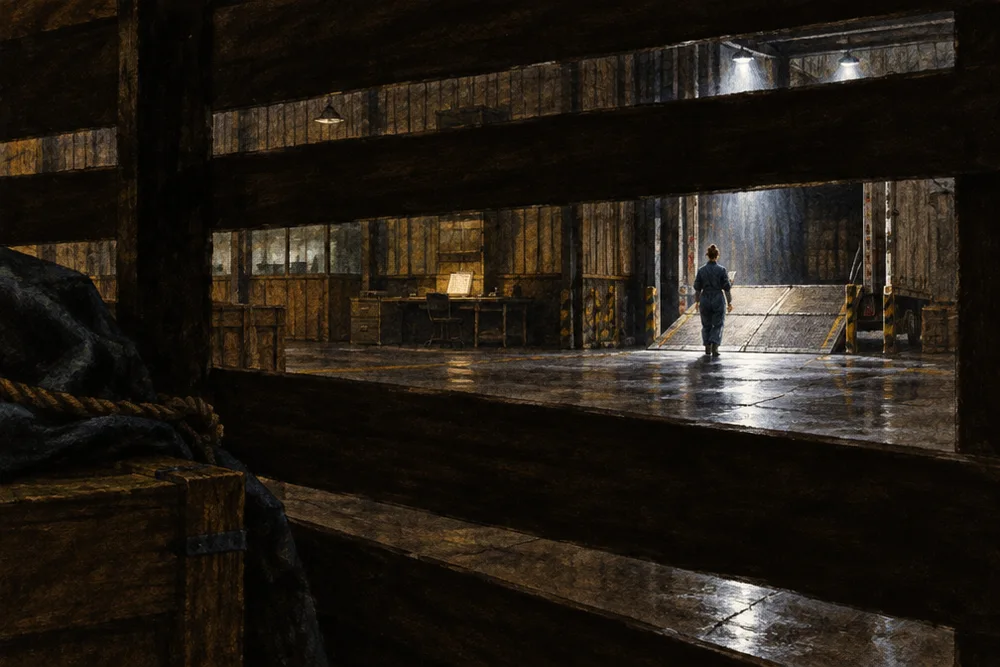
On her way out, Hester stopped beside the shelter crate. She pulled the delivery slip free once more and checked the date. It matched the first bed count, down to the hour. The paper was cream with a blue edge, the carbon mark thin as a thread. She folded the slip once along its old crease and slid it into her notebook, careful not to confuse it with the yellow copy she was still seeking.
The ferry’s night lights were on. Elías was somewhere above the ramp, making sure the crossing remained available to whoever needed it. Hester could hear the low engine vibration through the metal floor. She had once thought of the ferry as a temporary extension of the shelter, a place to move people until the county could organize its beds. Now she understood it had been a separate, improvised refuge, without a complete roster and without a clean record of who had been told to go where.
She walked through the terminal toward the exit. At the desk, the refusal list remained open on the screen. The addresses and names were small, the boxed code the same for all of them. The woman who had asked her to read the denial aloud was somewhere in Tern Sill with the paper in a plastic sleeve. The man with the repair invoice was waiting for review. Nella was at Bell Salt, near the people whose fabrics she altered, unwilling to move inland just because Hester had found a possible apartment.
The count could not tell Hester what each of them needed. It could not return a home or guarantee that every denied family would qualify for another one. But it could explain why the county’s refusal code might have been built on a meaning the original sheet never carried.
Tomorrow was the second morning left on her contract. She had one more chance to find the yellow paper before the final hearing process pulled everything into a decision. The bonus would come only if she completed the term. The desk would need her in the morning. The county needed a clean record, but the people standing in its lanes needed something more difficult: a record that admitted what it did not know.
Hester touched the flattened brass key in her pocket and went out into the evening. Thirty mattresses had been delivered. The shelter had set out thirty beds. She had made marks on a sheet, then crossed something out. The numbers could be made to fit. The people still could not.